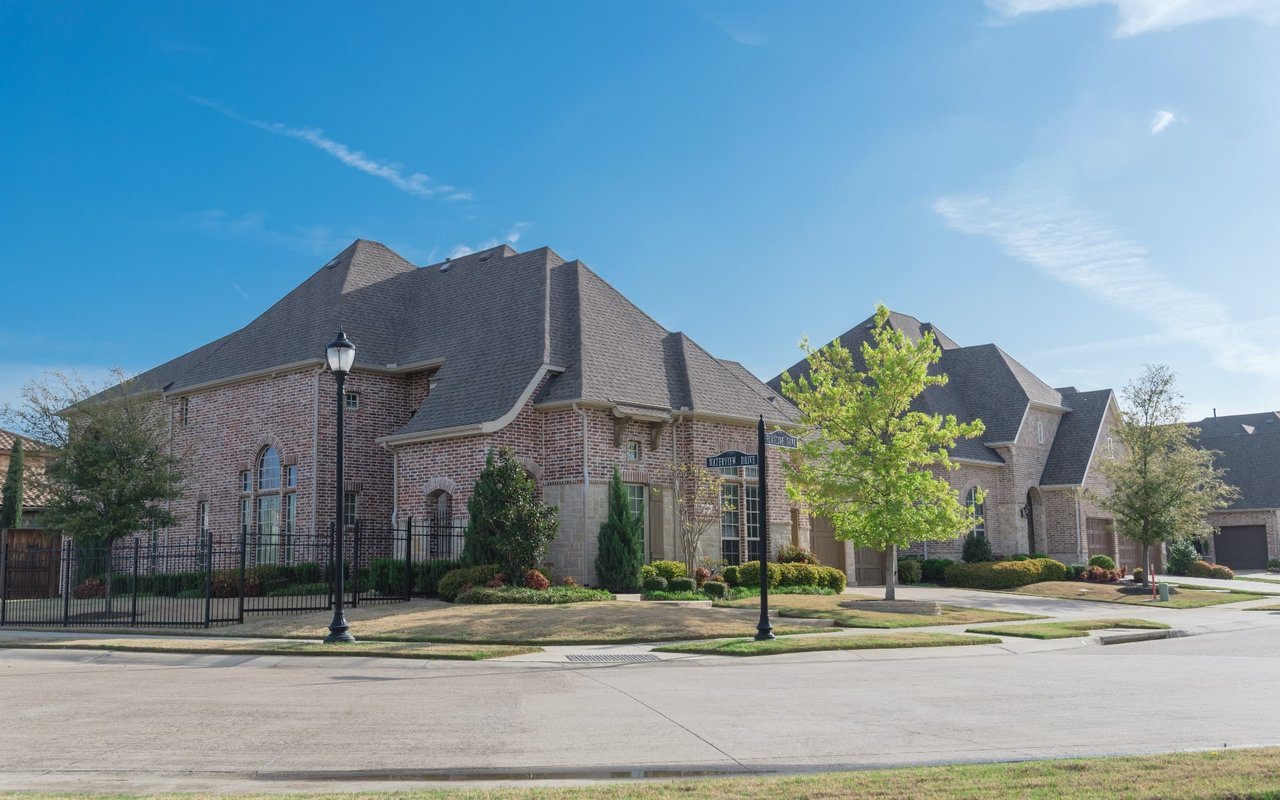
Why Is the San Antonio – New Braunfels Market "Hot" but My House Isn't Selling?
Market Updates Cody Posey December 15, 2025
Market Updates Cody Posey December 15, 2025
Why are national headlines calling San Antonio – New Braunfels a top real estate "hot spot" while your home sits on the market without offers?
While strong population growth keeps San Antonio – New Braunfels in high demand, a surge in inventory—now hovering near 6 months—has shifted the region to a balanced market. Sellers can no longer rely on frenzy; success now requires strategic pricing bands and pristine condition to win over selective buyers. For expert updates on Texas Hill Country and New Braunfels real estate market, contact Cody Posey – your dedicated specialist.
You open your news feed and see the headline: “San Antonio – New Braunfels Named Top 10 Housing Hot Spot.” You read about booming population growth and high demand. You feel confident. You feel excited. Then, you look at your phone. No showing requests. No feedback. No offers.
The silence is deafening.
This is the cognitive dissonance of the late 2025 housing market. Your neighbor says their house sold in a weekend three years ago, the media says the region is booming, but your lived experience is frustratingly different. You aren't imagining things, and your house isn't necessarily the problem. The problem is a misunderstanding of what "hot" means in the current economic landscape.
If you are feeling the gap between the "hot" headlines and the "crickets" at your open house, you need a new playbook. The frenzied seller's market of the early 2020s is gone. In its place is a more complex, rational, and balanced environment that requires skill, not just luck, to navigate.
To fix a problem, you first have to understand the mechanics behind it. When the National Association of Realtors (NAR) or other major entities label San Antonio – New Braunfels a "hot spot," they are primarily looking at macro-economic factors: job growth, population influx, and long-term desirability. People do want to live here. That part of the headline is true.
However, demand is only half of the equation. Supply is the other half, and that is where the game has changed dramatically.
According to late 2025 data from the San Antonio Board of Realtors (SABOR), the region has shifted into a "balanced market." Historically, a balanced market—where neither buyers nor sellers have a distinct advantage—is defined by having roughly 6 months of inventory. Currently, we are seeing about 5.9 months of inventory. This is a massive shift from the shortage years where inventory was often under 2 months.
Here is the reality of the numbers you are competing against:
Active Listings are Up: There has been roughly a 13% growth in active listings year-over-year. You have more competition than you realized.
Sales Volume is Down: Total sales volume has fallen by about 11%.
Prices are Flat: The median price is holding steady around $309,000. This means the rapid appreciation sellers got used to has plateaued.
Let’s look at a micro-example to prove this isn't just a general feeling. In the 78209 zip code—covering areas like Alamo Heights and Terrell Hills—inventory jumped from 3.4 months in May 2023 to 5.8 months in May 2024. That is a nearly 70% increase in supply. When supply rises that fast, the "frenzy" evaporates, even if the area remains desirable. The market isn't broken; it’s just returning to math-based rationality.
If you want to sell your home in this environment, you have to stop thinking like a seller from 2021 and start thinking like a buyer in 2025. Today's buyers are suffering from "old playbook" fatigue. They have spent years hearing horror stories of bidding wars, waived inspections, and paying $50,000 over asking price. They are tired, and more importantly, they are now educated.
Buyers today sense that the tide has turned. They know there is almost six months of inventory sitting on the market. This knowledge gives them leverage, but they are often unsure how to use it without overplaying their hand. They aren't looking to lowball you necessarily, but they are looking for value.
When a buyer walks into your home today, they are asking themselves two questions:
"Is this move-in ready?" With interest rates and insurance costs where they are, buyers have less cash on hand for renovations. They want turnkey properties.
"Is this priced for today or yesterday?" Buyers have access to the same data we do. If your home is priced based on your emotional attachment or the "hot spot" headlines rather than the comparable sales from the last 90 days, buyers will simply scroll past it.
In a balanced market, buyers have the luxury of choice. If your home doesn't check the boxes of condition and price, they will simply move on to the next one on the list. They are no longer operating out of the fear of missing out (FOMO); they are operating out of the fear of overpaying.
So, how do you sell when the market is balanced but competitive? You have to stop treating pricing as a guessing game and start treating it as a strategic bracket.
In a seller's market, you could pick an aspirational number and likely get it. In a balanced market, you must price ahead of the curve. This is where the concept of "Pricing Bands" comes into play. You need to look at who your competition is. If you price your home at $315,000, you aren't just competing with homes at $315,000; you are competing with the best home available between $300,000 and $325,000.
If your home is priced at the top of a band but has the features of a home at the bottom of the band (e.g., outdated fixtures, older roof, no landscaping), you will sit on the market. The goal is to be the obvious choice in your price bracket.
The "Interpreter Move": You need to reframe your mindset. Stop looking for a "hot" market where you can stick a sign in the yard and vanish. Reframe this as a "high-demand but rational" market.
High Demand: Means you will get showings if you are viable.
Rational: Means those showings will only convert to offers if the math makes sense.
This strategy requires checking your ego at the door. It is not about what you "need" to net from the sale. It is about what the market is willing to bear. If you ignore the list-to-sale price statistics of your specific neighborhood, you risk becoming a stale listing. And in real estate, time is the enemy of value. The longer you sit, the more buyers assume something is wrong with the house.
To eliminate the frustration and the emotional rollercoaster of checking your phone for updates that never come, you need a concrete game plan. We call this the "If/Then Protocol." This turns stressful waiting periods into clear business decisions.
Before you even list—or if you are currently stagnant on the market—agree to these metrics:
Metric 1: Showings vs. Time
The Rule: If you have had 0 to 2 showings in the first 14 days, the market is rejecting your price. It’s not the photos, it’s not the weather, it’s the price.
The Action: Plan an immediate price adjustment of 3-5%. Do not wait for a month to pass.
Metric 2: Showings vs. Offers
The Rule: If you have had 10+ showings but 0 offers, the market likes your location and photos, but the reality of the home doesn't match the price tag. Usually, this means the condition is lacking compared to the competition.
The Action: You have two choices. Either improve the condition (paint, staging, repairs) or adjust the price downward to compensate for the work the buyer will have to do.
Metric 3: The "Crickets" Threshold
The Rule: If you are receiving zero inquiries, you are likely priced out of your bracket entirely. You are invisible because you are appearing in searches for a higher caliber of home.
The Action: Look at the "sold" data for the last 60 days. Where did the homes similar to yours actually close? Reset your price to that number immediately.
By agreeing to these rules beforehand, you remove the emotion. You aren't "lowering your price" out of desperation; you are "executing your strategy" based on market feedback. This is how you move from "crickets" to "closing" in a balanced market.
Q: Is San Antonio – New Braunfels currently a Buyer's Market or a Seller's Market? A: As of late 2025, San Antonio – New Braunfels is technically a Balanced Market. With roughly 5.9 months of inventory, neither side has a drastic advantage. However, because inventory has risen so quickly (up 13% in listings), it often feels like a Buyer's Market because buyers are taking their time and negotiating harder than they did in previous years.
Q: Should I take my home off the market if it hasn't sold in 30 days? A: Not necessarily. In a market with 5-6 months of inventory, average days on market (DOM) naturally increases. 30 days is no longer "stale" like it was in 2021. However, if you have had no activity in 30 days, you shouldn't just wait—you should adjust your price or strategy. Withdrawing often just delays the inevitable need to price correctly.
Q: Why is the news saying the market is "hot" if sales volume is down? A: The news often conflates "activity" with "sales." The "hot" label usually refers to population growth, job creation, and the number of people looking for homes. But high interest rates and increased inventory mean that while people want to buy, fewer are actually pulling the trigger. The desire for San Antonio – New Braunfels is hot; the transaction speed has cooled.
The disconnect between the "hot" market headlines and the silence at your front door is frustrating, but it is solvable. The market has shifted to a balanced state where inventory is plentiful, and buyers are rational. Success in late 2025 isn't about luck; it's about data.
If you are ready to stop guessing and start selling, let's look at the specific numbers for your neighborhood. I can build a custom "If/Then" pricing strategy for your home that aligns with the current 5.9-month inventory reality, ensuring you aren't just listed, but actually sold.
Would you like me to run a specific inventory analysis for your zip code to see exactly where your home fits in the current San Antonio – New Braunfels pricing bands?

Buyers Corner
Veterans
Strategic Selling

Buyers Corner

Buyers Corner

Strategic Selling

Lifestyle Change

Buyers Corner

Strategic Selling
Get assistance in determining current property value, crafting a competitive offer, writing and negotiating a contract, and much more. Contact me today.