
How do Canyon Lake water levels affect real estate in 2026?
Quick Answer
As of 2026-05-04, Canyon Lake is about 59.0% full with a mean water level around 886.78 ft, per Water Data for Texas. For real estate, that usually shows up in three places: how usable the shoreline feels from a specific lot, what buyers believe they’re buying when they hear “lakeview,” and how lenders and insurers treat flood-related questions (which often depends more on mapping and access than the day’s reading). If you’re buying or selling near Canyon Lake in 2026, the smartest move is to verify access and shoreline conditions for that exact property, not just go off the headline percent full. For expert updates, contact Cody Posey Real Estate.
What does “59% full” actually mean for Canyon Lake homes?
A lot of people hear a single number like “59% full” and assume it’s a straight-line price impact. It’s not. It’s a useful signal, but it doesn’t tell you what you really want to know as a buyer or seller: what does the lake look and feel like from this property today, and what will a typical buyer think when they stand on the back patio?
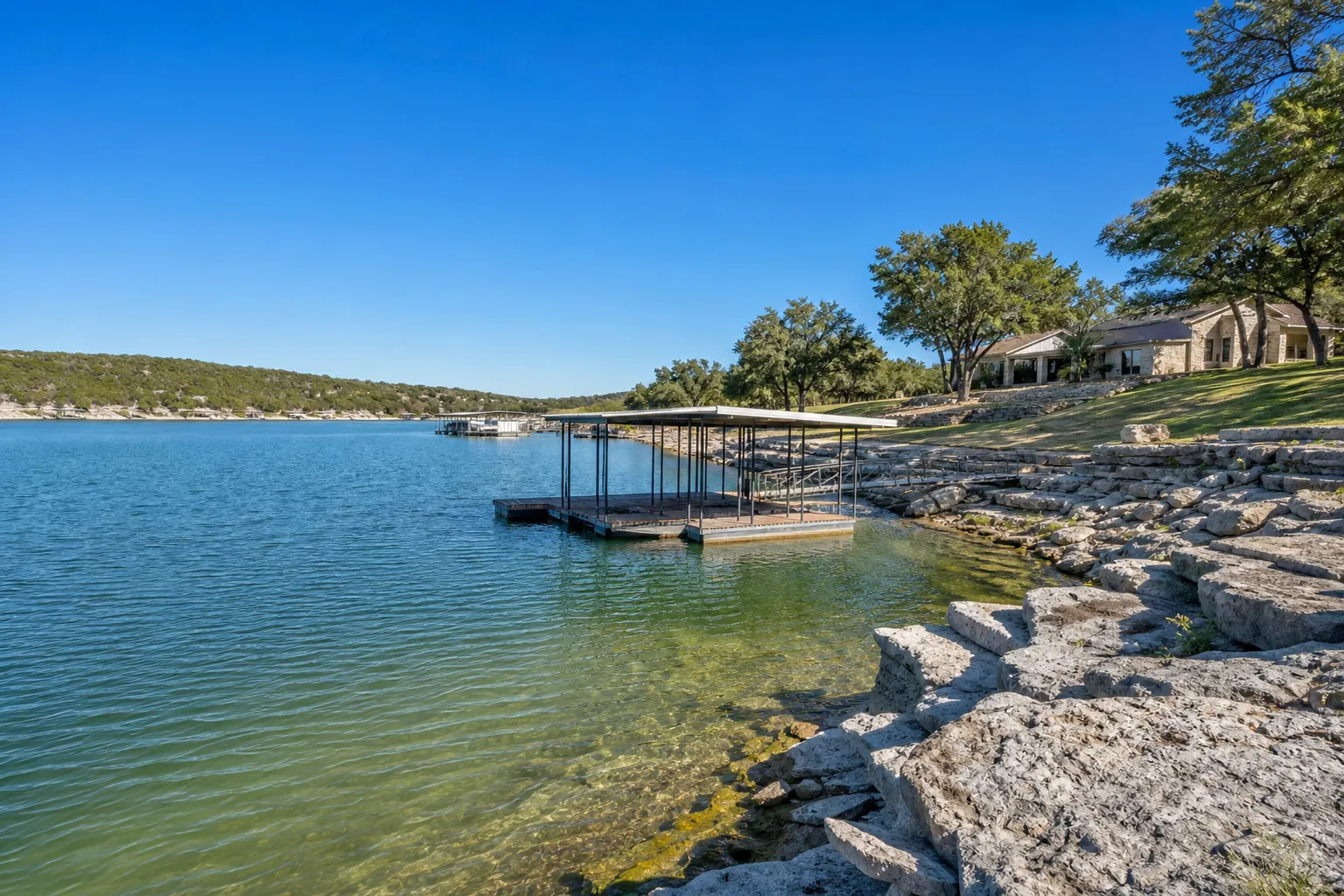
At 59.0% full on 2026-05-04, Water Data for Texas reports storage around 223,597 acre-feet versus a conservation capacity of 378,781 acre-feet. That can translate to a noticeably pulled-back shoreline in some coves, while other areas still feel “normal” because of slope, rock shelves, and how the shoreline was built out. Two houses can be priced similarly and sit a few minutes apart, but one feels like it has water right there and the other feels like it has “a view of where the water usually is.”
Here’s the practical real-estate takeaway I share with relocating buyers: don’t shop “Canyon Lake” as one bucket. Shop it as a set of pockets with different shoreline profiles and access patterns. If you’re still deciding where to focus your search, start with the broader Canyon Lake area overview, then narrow down based on whether you care most about water proximity, privacy, HOA rules, or commuting back toward New Braunfels and IH-35.
One more nuance: “lakefront” and “walk-to-lake” get used loosely in casual conversation. When water levels are lower, that difference becomes obvious fast. It’s not a deal-breaker either way, but it changes expectations, and expectations drive negotiations.
Which types of properties are most sensitive to water levels?
In 2026, I see water level sensitivity show up most clearly in three property types: true waterfront lots with shoreline rights and dock-related expectations, “lakeview” homes where the view corridor is the selling point, and short-term-rental style homes where the buyer is underwriting demand based on the lake experience.
Waterfront and dock expectations. Buyers often assume “there’s a dock” means “there’s always usable water at the dock.” In practice, usability depends on the specific cove and slope. If the waterline is farther out, the experience can change even if the address is the same. When that mismatch shows up during due diligence, it can create price pressure or repair requests because the buyer feels like the marketing didn’t match reality.
Lakeview homes. For many Canyon Lake buyers, the view is the emotional trigger. Water levels can change the look of the view, especially in coves. The mistake I want you to avoid is valuing a “lakeview” home the same way you would in a year when the shoreline is tight to the bank. A good pricing strategy anchors on what a buyer can see from the main living area and outdoor spaces today, not what it looked like in a listing photo from another season.
“Close to the lake” without the premium. This is where deals can actually exist. A home that is not truly waterfront can still be the right fit for someone who wants Hill Country living, a bit more space, and access to the lake lifestyle without paying top-of-market waterfront pricing. If you’re comparing lifestyle options, my post on living near the river vs. the lake in the Hill Country is a good companion read, because it helps you decide what “water access” really means for how you live.
Trying to decide if Canyon Lake is the right Hill Country fit for your move?
I’ll help you compare Canyon Lake pockets against New Braunfels, Bulverde, and nearby areas based on your budget, commute, and what “lake access” means to you.
Call Cody Posey Real Estate at 830.360.5569 · Compare Hill Country areas that fit how you live
How should buyers verify access, risk, and true value before making an offer?
If you’re buying near Canyon Lake in 2026, your goal is simple: make sure the home you’re offering on matches the experience you think you’re buying. Water levels are part of that, but they’re not the only part.
1) Validate the experience from the lot, not just the map. Stand where you’ll actually live: back patio, primary bedroom, main living area. Ask yourself, “If I came out here every weekend for the next year, would I feel like I got what I paid for?” In lower-water conditions, you’ll notice whether the shoreline feels like a short walk or a hike, and whether the cove stays attractive.
2) Treat “waterfront” as a facts checklist. When a listing says waterfront, lake access, or dock, confirm what’s included, what’s permitted, and what’s shared. HOA rules and deed restrictions can matter just as much as the lake level. This is also where I see relocating buyers get tripped up. They’re used to different shoreline rules in other states, and they assume “lakefront equals private beach.” That’s not how most properties around Canyon Lake function in real life.
3) Separate today’s water level from long-term decision-making. Water levels can move. What stays consistent is the property’s location, slope, access route, restrictions, and how buyers shop that pocket. So instead of asking, “Will the lake go back up?” the better question is, “If the lake stays roughly in this range for a while, is this still the right purchase for my plan and budget?”
If you’re early in the process and still figuring out which part of the region fits, use my Hill Country area comparison guide to narrow to 2 or 3 target pockets first. That keeps you from overpaying emotionally for a “dream view” that doesn’t match the day-to-day experience.
How can sellers price and market a Canyon Lake home when the lake is lower?
Sellers can absolutely win in a lower-water year, but you have to price and position the home for how buyers are shopping right now. The fastest way to create problems is to price the home as if the lake looks like it did in the best photo from three summers ago.
Start with a comp set that matches the experience. If your home is lakeview, your comps need to be other homes where the view is a primary driver, not just “near the lake.” If your home is “close to the lake” but not waterfront, you’ll often compete against newer construction or larger lots farther back that still deliver Hill Country lifestyle. That’s why the marketing and pricing story has to be precise.
Show the truth, but show it well. Buyers don’t want surprises. They’ll forgive lower water. They won’t forgive feeling like a listing hid it. When I’m advising sellers, I’d rather we show the actual shoreline condition with clean photos and set expectations than invite a renegotiation later. The goal is to attract the buyer who says, “This is exactly what I expected,” not the one who arrives hoping for a different lake.
Have the answers ready. In 2026, I get the same three buyer questions on repeat: “How far is it to the water from the yard?” “Is there reliable access?” and “What’s the real tradeoff versus a neighborhood in New Braunfels?” If your listing can answer those clearly, it builds trust and keeps the negotiation focused on value instead of doubt. If you want a broader lifestyle fit check, my post Is Hill Country living right for you? helps buyers self-select, which is great for sellers because it reduces showings from people who were never going to commit.
A quick 5-step checklist before you buy near Canyon Lake
- Check the current percent full and water level, then verify what it looks like from the property.
- Confirm what “lake access” means for that lot (walk path, easements, shared access, restrictions).
- Review HOA and deed restrictions for dock, short-term rental, and exterior-use rules.
- Ask your lender and insurance agent how flood-related questions apply to that exact address.
- Price your offer based on today’s experience, not last year’s best photo.
In Closing
If you’re planning a Hill Country move in the next 30–180 days, the next step is to compare Canyon Lake against a couple of nearby pockets that fit your budget and daily routine.
Call Cody Posey Real Estate at 830.360.5569 and I’ll map the tradeoffs, current water-level context, and the best-fit areas for your shortlist. If you prefer to start on your own, use the <a href="/explorearea/">Hill Country area comparison guide</a> and I’ll help you narrow it fast.
Ready to talk strategy? Cody Posey Real Estate at 830.360.5569.
Sources: Water Data for Texas (TWDB) — Canyon Lake · USGS NWIS site inventory (Canyon Lake / site 08167700) · KABB/WOAI (News 4 San Antonio) — Canyon Lake drought impacts on tourism