
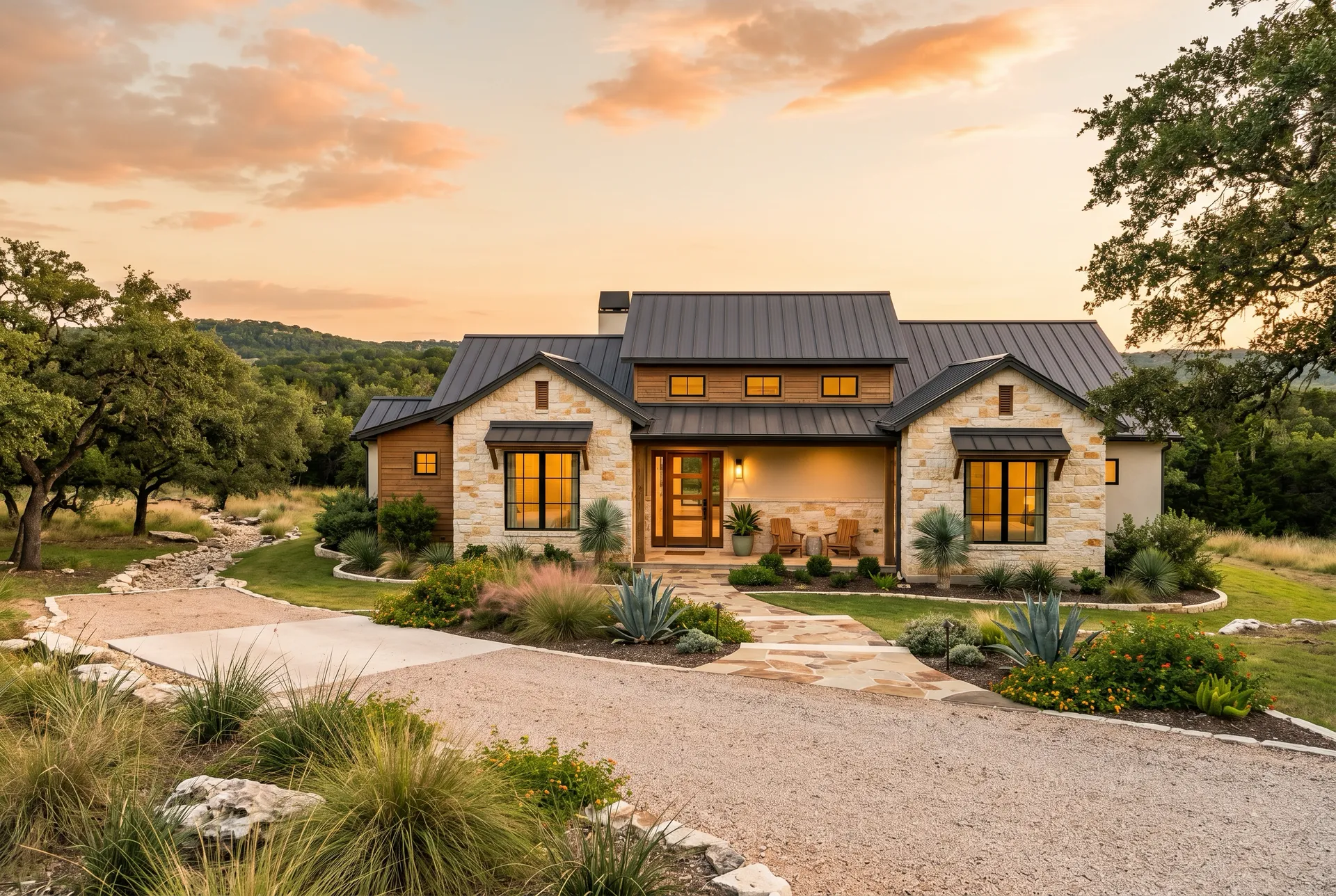
Does buying in the Hill Country feel like you only get one shot to get it right?
Quick Answer
You can absolutely buy with confidence, even in a shifting market, if you follow a simple order of operations: get fully pre-approved (not just pre-qualified), tour with a checklist, write a clean offer backed by facts, then use the Texas option period to inspect and negotiate quickly. If you want the full step-by-step, start with my home buying process guide.
The Complete Picture
Buying a home in the Texas Hill Country is exciting, but it’s also one of the biggest financial decisions you’ll make. And in and around New Braunfels, the experience can change a lot depending on the neighborhood, the price point, and even the week.
Some homes sit and give you room to negotiate. Others, especially the ones that are priced right and show well, still move quickly.
That’s why I coach buyers to stop thinking in terms of “house hunting” and start thinking in terms of a repeatable plan. When you follow the right order of operations, you avoid the two expensive mistakes I see most often:
- Falling in love with a home before your numbers are locked in.
- Rushing contract decisions without a due diligence game plan.
I’ll walk you through the exact roadmap I use with buyers so you feel prepared from financing all the way to the final walkthrough.
The Roadmap I Use With Buyers (Offer to Keys)
1) Start with real numbers, not vibes
Before we talk about paint colors or pools, we get your budget grounded in reality.
That means:
- A lender who can explain your payment range clearly (principal, interest, taxes, insurance, HOA).
- A pre-approval that accounts for what you actually want to buy, not a generic max.
- A plan for your cash needs, including appraisal gaps (if any), option fee, earnest money, and closing costs.
If you’re still figuring out what “comfortable” looks like, my mortgage calculator is a good first step to sanity-check payments before you tour.
One more thing I’ll add, because it matters in 2026: we also talk about payment strategy. Some buyers want the lowest possible out-of-pocket today, some want the lowest possible payment, and some want flexibility.
Those decisions can change what “best” looks like:
- A slightly higher purchase price with a seller credit could make sense if it lowers your cash-to-close or helps fund a rate buydown.
- A clean, tighter offer might beat a higher offer that feels uncertain.
- A payment you can comfortably handle for the next 3 to 5 years is usually more important than chasing the perfect interest rate headline.
My job is to help you pick a lane that fits your real life, not just the spreadsheet.
2) Tour homes like you’re verifying a claim
A good showing is not a vibe check, it’s a verification process.
When we tour, we’re not just asking “Do I like this?” We’re also asking:
- Does the floorplan live the way you think it does, or does it just photograph well?
- What will be expensive later (roof age, HVAC age, drainage patterns, big trees close to the foundation)?
- What’s the neighborhood reality (traffic cut-throughs, noise, slope, access, nearby projects)?
This is where local experience matters. New Braunfels real estate can change block by block. The goal is to spot the “pockets” that match your lifestyle and avoid the ones that look good online but don’t fit day-to-day life.
When buyers tell me, “Everything looks the same after the fifth house,” that’s normal. What helps is using the same quick checklist every time so you can compare apples to apples:
- Big-ticket ages: roof, HVAC, water heater (if you can see them)
- Layout realities: bedroom sizes, storage, laundry placement, natural light
- Exterior/drainage: slope toward the home, standing water, gutter discharge points
- Street feel: traffic, parking, noise, and how it feels at different times of day
- Future friction: HOA restrictions, weird easements, adjacency to commercial or cut-through roads
You don’t have to become a contractor to tour well. You just need a consistent way to notice patterns.
3) Write an offer that is strong and clear (not just high)
Most buyers assume “strong offer” equals “highest price.” Sometimes it does. Often it doesn’t.
In a multiple-offer situation, sellers typically choose the offer that feels most certain. Certainty can come from:
- A clean timeline (fast enough to be attractive, realistic enough to actually close).
- Solid proof of funds for down payment and any appraisal gap.
- Reasonable contingencies that still protect you.
- Thoughtful terms that reduce friction.
Here’s my rule: I’d rather help you submit one excellent offer on the right home than five rushed offers that expose you to risk.
And if you’re worried about overpaying, here’s the practical framework I use to keep buyers grounded:
- Recent comparable sales tell us the realistic value range.
- Active competition tells us the pressure level (how many similar homes are available right now).
- Concessions tell us what the market is “really paying” (a $10,000 seller credit is effectively a different net price than a no-credit offer).
That combination helps us decide when to be aggressive, when to be patient, and when to walk.
4) Understand the Texas option period (your leverage window)
Texas is different than many other states because the contract has a negotiated termination option period. In plain English, it’s a short window of time after the contract’s Effective Date where you can terminate for any reason.
That’s why the option period is the heart of the buyer’s due diligence plan.
The practical takeaways:
- The option period is counted in calendar days (not business days), and deadlines are strict.
- The option fee is generally non-refundable, but it buys you flexibility.
- This is when you have the most leverage to negotiate repairs or credits, because you can still walk away.
I’m careful here for a reason. Waiving protections you don’t fully understand is one of the fastest ways to turn a “great deal” into an expensive lesson.
If you’re relocating from out of state, this can feel unfamiliar. Many states use inspection contingencies with different rules. In Texas, the option period is the cleanest “pressure release valve” you have, which is why I plan around it from the very beginning.
5) Front-load inspections and due diligence
If you only remember one thing, remember this: don’t wait.
The best buyers treat day one of the option period like a sprint. We schedule:
- General inspection immediately.
- Specialty inspections only if the general report points to something material (foundation, roof, plumbing, drainage, etc.).
Hill Country properties can have unique “gotchas” that are very property-specific. Drainage is a big one. Flood risk is another. Even if a home isn’t in a floodplain, water can still move aggressively during storms.
A smart baseline check is FEMA’s Flood Map Service Center, then we combine that with on-the-ground reality and what the seller has disclosed.
If you’re buying in the Hill Country, there are a few scenarios where I’ll often recommend being extra thorough (depending on what the general inspection shows):
- Older homes where plumbing lines, cast iron, or previous repairs are a question mark
- Homes with noticeable slope, cracks, sticky doors, or other signs that call for a closer foundation look
- Properties where drainage patterns could move water toward the home during heavy storms
- Acreage properties where access, fencing, outbuildings, or utilities add complexity
The point is not to “find problems.” The point is to understand what you’re buying, what it might cost later, and what needs to be addressed now.
6) Negotiate like a grown-up (repairs, credits, and priorities)
The goal of an inspection is not to produce a “perfect” house. Every home has items.
A good negotiation focuses on:
- Safety issues.
- Big-ticket system failures.
- Items that materially change the value or the risk profile.
Sometimes the right answer is repairs. Sometimes it’s a credit. Sometimes it’s a price adjustment. And sometimes it’s walking away because the risk no longer matches the deal.
This is also where the market reality shows up. In some pockets, sellers will address more. In others, they won’t. The difference is usually pricing, competition, and how unique the home is.
7) Keep the deal on track to closing
Once we’re past the option period, the job becomes execution.
That means staying ahead of:
- Lender conditions (don’t let paperwork drag).
- Appraisal timing.
- Title and HOA documents.
- Insurance and any required inspections.
A smooth close is usually the result of a boring, disciplined checklist.
If you want a deeper walkthrough of costs, timelines, and what to expect on the closing side, start with my buyer resources and then we’ll tailor it to your specific situation.
Key Insights (the “don’t mess this up” list)
- The best buyer advantage is preparation. A fully pre-approved buyer can move quickly without panic.
- A “winning offer” is usually a clean offer. Clear terms beat clever terms.
- The option period is your leverage window in Texas. Use it intentionally.
- Hill Country due diligence is property-specific. Drainage, grading, and water flow deserve real attention.
- Your goal is not to win a bidding war. Your goal is to buy the right home on terms you can live with.
Market Reality in 2026 (what I’m seeing locally)
The market feels more nuanced than a simple “buyers market” or “sellers market.”
In New Braunfels and the surrounding Hill Country:
- Well-priced, well-presented homes still get attention quickly.
- Overpriced homes are sitting longer, and that creates negotiation opportunities.
- Concessions (closing cost help, rate buydowns, repair credits) show up more often in certain price points.
This is exactly why a plan matters. You don’t want to treat every house the same, and you definitely don’t want to treat every neighborhood the same.
The buyers who do best right now usually share a few traits:
- They’re decisive when the home matches the plan.
- They’re patient when it doesn’t.
- They don’t confuse “negotiation opportunity” with “automatic discount.”
In other words, we stay factual. We use comps, we use condition, we use current competition, and we keep the offer strategy tied to what the home is actually worth in today’s market.
That’s also why I like building a short “A-list” of neighborhoods or micro-areas for each buyer (the pockets that truly fit). It cuts down on decision fatigue and helps you recognize the right house faster when it shows up.
Action Steps: Your 7-Day Due Diligence Game Plan
If you’re going under contract, here’s a simple way to stay ahead of your deadlines.
- Day 0: Contract executed. Confirm timelines and delivery requirements.
- Day 1: Schedule inspection(s). Request seller disclosures and key docs.
- Day 2–3: Inspection happens. Start prioritizing issues.
- Day 3–5: Get estimates on any big-ticket findings.
- Day 5–6: Decide what to request (repairs, credits, price adjustment).
- Day 6–7: Negotiate and make a final decision before your option deadline.
Closing CTA
If you’re planning a move in New Braunfels or anywhere around the Texas Hill Country, I’m happy to help you build a plan that fits your budget and your timeline, then execute it without the stress.
Reach out here: Cody Posey Real Estate or call/text 830.360.5569.
Sources
- Texas Real Estate Research Center (Texas A&M) — Option Period Basics: https://trerc.tamu.edu/article/option-period-basics-2360/
- Freddie Mac — Primary Mortgage Market Survey (PMMS): https://www.freddiemac.com/pmms
- FEMA Flood Map Service Center: https://msc.fema.gov/portal/home
Sources: Texas Real Estate Research Center (Texas A&M) — Option Period Basics; Freddie Mac — Primary Mortgage Market Survey (PMMS); FEMA Flood Map Service Center.