
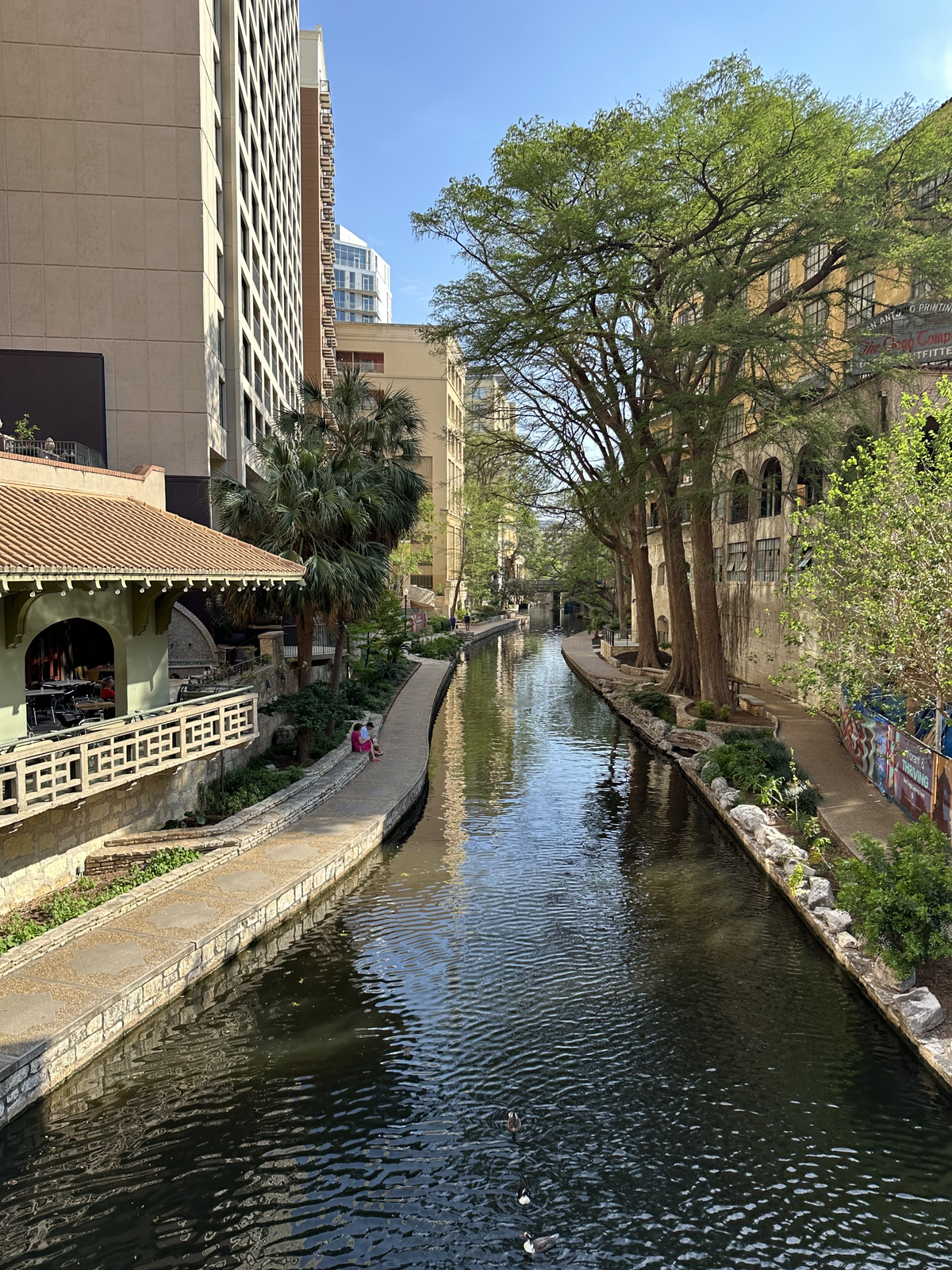
Every month I talk to buyers relocating to San Antonio from California, Colorado, Virginia, the Pacific Northwest — and they all ask the same questions, in roughly the same order. Cost first. Then taxes. Then where to live. Then schools. Then the military piece, because half of San Antonio's relocations touch Joint Base San Antonio somehow.
Here are the seven questions relocation buyers actually ask, with the numbers as they stand in late September 2026.
1. What does it actually cost to live in San Antonio?
San Antonio runs about 9% below the U.S. national cost of living average, and housing is where almost all of that gap comes from. Groceries, gas, and day-to-day spending track close to the Texas average — the savings concentrate in your monthly housing payment.
On prices: Redfin's data for the three months ending August 2026 put the median San Antonio sale price at roughly $265,000, down about 1.9% from the year before. SABOR's March 2026 reading was higher at $316,850 — different coverage and methodology, but the story is consistent either way: San Antonio sits about $180,000 below Austin's median, roughly 30% below Dallas–Fort Worth, and right around the national average or better.
What does that buy you? A 2,500-square-foot home with a yard in a well-rated school district in San Antonio is the same money as a townhome in an outer suburb of Austin or DFW. The $200K–$500K range covers roughly 68% of all San Antonio sales, so the core of the market — the three- and four-bedroom family home — is firmly in play for a typical relocator's budget.
One number to keep in your head: families moving from Austin or Dallas typically see $400–$600 a month in net savings on housing and utilities, which is enough to absorb a modest pay cut and still come out ahead.
2. What's the property tax catch?
There is always a catch with affordability, and in Texas it is property taxes. There is no state income tax — moving from California (13.3% top rate) or New York (10.9%) to Texas can save a high earner five figures a year. But Bexar County's effective property tax rate runs about 2.2%.
Do the math on a $300,000 home: roughly $6,600 a year in property taxes before exemptions. That stings on paper, but two things soften it. First, a homestead exemption caps your annual taxable appraisal growth at 10% and takes a slice off the taxable value. Second, the home itself costs $150K–$200K less than the equivalent in Austin or a coastal metro — on a 30-year mortgage, that price difference dwarfs the tax gap.
Bottom line from every relocation buyer who has run the spreadsheet: the net is favorable. Just model taxes, insurance, and HOA into the monthly payment — not principal and interest alone — before you fall in love with a price tag.
3. Where should I actually live?
San Antonio is a big, sprawling metro — 1.5 million people in the city, 2.6 million across the metro — and the right neighborhood depends on your commute, your budget, and whether schools matter. Here is the honest map:
North Central / Stone Oak ($440K–$520K). The relocation buyer default. North East ISD schools, strong resale demand, and a 20–25 minute commute to most north-side employers. Master-planned feel, plenty of newer construction.
Alamo Heights and Terrell Hills ($500K+). The premier in-town corridor — Alamo Heights ISD, five to ten minutes from downtown and the medical center, historic homes with real character. You pay for it, and there is no negotiating around that.
Cibolo, Schertz, and Converse ($240K–$360K). The value corridor. This is where first-time and mid-career relocation buyers get the most house for the money, with solid schools and a 10–20 minute run to Fort Sam Houston and Randolph AFB. When comparing districts, look at actual performance data and boundaries — district maps matter more than district reputations in San Antonio's sprawl.
Far west / Alamo Ranch. Newer homes, bigger lots, shopping everywhere, and some of the most aggressive new construction pricing in the metro. Commutes to downtown run longer — plan on 30+ minutes in traffic.
Helotes and the Hill Country fringe. If you want acreage views and a slower pace with a 20–30 minute drive into town, this is your corridor. It pairs naturally with the Hill Country lifestyle — and if you are torn between San Antonio and the Hill Country towns, the pros and cons of living in New Braunfels lays out what you gain and give up heading north up I-35.
One note on the luxury end: The Dominion and the 78257 corridor carry median prices around $818K, and that market is firmly buyer-friendly right now with nearly 100 average days on market. Different game entirely.
4. Is it a buyer's or seller's market right now?
Buyers have the leverage — and they have not had it this clearly since before 2020. Inventory is up across the market, homes sit a median of about 58 days, and roughly 44% of listings take a price cut before they sell. Overpriced listings sit. Well-priced homes still move, but the frenzy of bidding wars and 10-offers-over-weekend is gone.
For a relocation buyer, this matters more than for a local buyer: you can negotiate from out of state without the panic of losing every house. You get inspection room, closing-cost credits, and time to actually think. Forecasts for the rest of 2026 see prices holding flat or rising a modest 2–4% annually — no crash on the horizon, no runaway appreciation either. Balanced.
5. How are the schools?
This is the question that decides the neighborhood for most relocation families, so get specific. San Antonio's big public options:
- North East ISD (NEISD) — consistently top-rated, feeds Stone Oak, Alamo Heights-adjacent areas, and much of the northeast.
- Northside ISD — the largest in the area, feeds the far west and northwest corridors including Alamo Ranch.
- Alamo Heights ISD — the premier small district, but you buy a $500K+ home to get into it.
- Comal ISD — excellent suburban option if you are looking at the New Braunfels side of the metro.
If you are looking at new construction in the northern corridors, Boerne's 2026 buying guide covers prices, schools, and commute times for the Boerne ISD side. Private and charter options — Keystone, TMI Episcopal, Great Hearts, KIPP — are solid backups if the public zoning does not work out.
6. I'm military or PCSing — what changes?
A lot, and almost all of it is good news. Joint Base San Antonio — Lackland, Fort Sam Houston, and Randolph — is one of the largest military installations in the country, and it is a genuine economic anchor, not just a presence. The military share of relocations keeps the VA-loan market deep and competitive.
For 2026, the San Antonio Military Housing Area BAH table covers all three JBSA installations: with-dependents rates run $1,869 (E-5) up through $2,127 (O-3). You can check the current BAH rates for the San Antonio area anytime — they are updated annually. An E-6's $2,094 monthly BAH paired with a zero-down VA loan (no PMI) supports roughly a $270,000–$320,000 purchase, which lands squarely in Converse, Universal City, Windcrest, and parts of Schertz and Cibolo.
If you are PCSing to Fort Sam Houston specifically, my PCS buying guide maps the neighborhoods by commute time and BAH band. And if your move involves the broader military relocation process — report dates, house-hunting trips, remote closings — that page covers the logistics most guides skip.
One caution for 2026: BAH rates dipped about 3% from 2025. Anyone already stationed here keeps the higher rate under DoD rate protection, but newcomers should budget off the current table, not last year's.
7. What's the catch?
Every relocation buyer eventually asks this, usually right after the spreadsheet looks too good. The honest answers:
The heat is real. San Antonio summers run long and hot — 100-degree stretches from June through September. You will plan your life around it, and your electric bill reflects it. Most relocators adjust within one summer; some never do. Know which type you are.
You need a car. This is not a public-transit city. The average commute is about 25 minutes, which is fine, but "fine" assumes a car. Factor a vehicle into your cost-of-living math if you are coming from a walkable metro.
It is sprawling. The metro covers a huge footprint, and your quality of life depends heavily on picking the right corridor for your commute. A 30-minute drive is the norm; a bad corridor choice turns it into 60.
Summer electricity. CPS Energy's municipal rate structure keeps utilities below state norms, but August bills still bite. It is a line item, not a dealbreaker.
None of these are hidden. They are just the price of a $265K median in a major metro with no income tax and a 2.6-million-person economy anchored by the military, USAA, HEB, the medical center, and Toyota.
The relocation playbook
If you are moving to San Antonio in 2026, here is the order of operations I give every out-of-state buyer:
- Lock your budget with taxes included. Model property tax at ~2.2%, insurance, and HOA — not just principal and interest.
- Pick your corridor before your house. Commute first, then neighborhood, then the specific property. San Antonio's sprawl punishes corridor mistakes.
- Get pre-approved early. Especially for VA buyers — the zero-down, no-PMI structure is a genuine advantage here, and sellers in this market take VA offers seriously.
- Use the buyer's market. 58 days on market and 44% price cuts mean you negotiate. Inspection periods, closing-cost credits, rate buydowns — ask.
- Visit at your real commute hour. Drive the Stone Oak-to-Fort Sam route at 7:30 AM before you commit. The listing says 20 minutes. Rush hour has opinions.
San Antonio is not the cheapest market in Texas on every line item, but it is the most affordable major metro in the state with the deepest job base and the best military infrastructure. For relocation buyers, the math holds — and in 2026, the market finally gives you the negotiating room to use it.
Moving to San Antonio in 2026? Get the relocation plan before you start touring. Call or text me at 830-360-5569 — I'll run your budget, your commute, and your timeline against the actual market data, no fluff.
Educating. Serving. Delivering Results.