
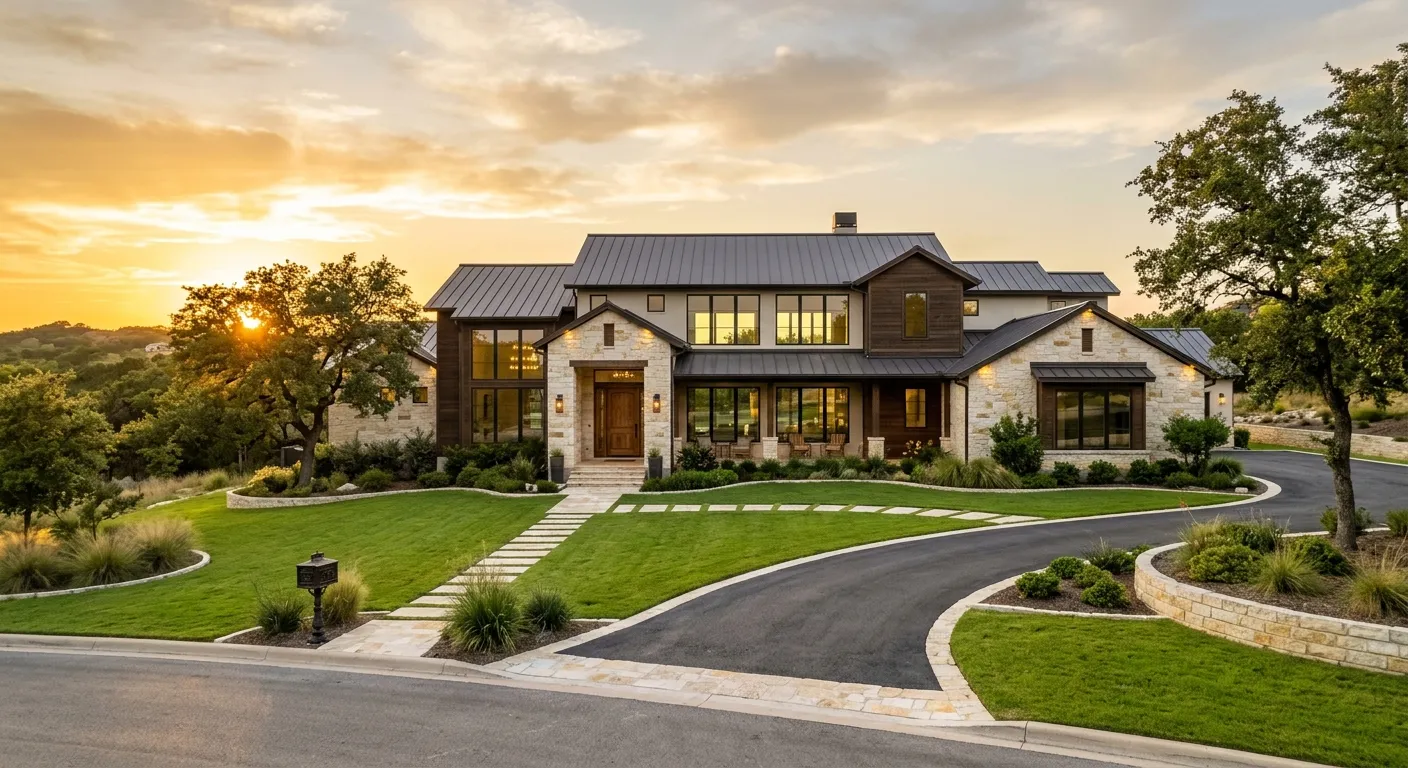
How do you price your New Braunfels home in 2026 without leaving money on the table or watching it sit?
Quick Answer
In 2026, the best New Braunfels pricing strategy is simple but disciplined: price to the most recent comparable sales in your specific pocket, launch with strong presentation, and go in with a clear plan for concessions. Start with a real comp-driven valuation (not a guess) and sanity-check your net using a seller’s net sheet. If you want a second set of eyes on your price range, I can run a hyperlocal valuation through my home value process.
The Complete Picture
If you’re thinking about selling in New Braunfels this year, you’ve probably felt the shift: buyers are still out there, but they’re more selective, more payment-sensitive, and more likely to compare your home to every other option in a few clicks.
That’s exactly why pricing strategy matters more in 2026 than it did during the frenzy years. The goal is not to “win the list price conversation.” The goal is to create a launch price and positioning that:
- earns serious showings quickly
- protects your leverage in negotiation
- keeps your contract clean through inspection and appraisal
- nets you the most money with the least drama
Here’s the part most sellers miss: New Braunfels isn’t one market. It’s a collection of pockets.
A home near downtown/Landa Park, a newer build in Veramendi, a neighborhood on the south side, and a Hill Country property out toward Canyon Lake can all move at different speeds, with different buyer profiles and different “deal” expectations. So when someone says, “the market is doing X,” the real question is, “in your pocket, at your price point, with your condition and layout, what are buyers choosing today?”
What “Strategic Pricing” Actually Means in 2026
Strategic pricing is not just a number. It’s a plan.
A strong pricing plan has three layers:
- The data layer: recent closed comps, pending comps, and the actives you’re truly competing against.
- The product layer: how your condition, updates, layout, lot, and location compare to those comps.
- The leverage layer: how you’ll respond if you get multiple offers, a single offer, or crickets.
In 2026, I’m watching many markets show a higher share of price reductions and more time on market than the hyper-competitive years, which lines up with broader national data sources. That doesn’t mean “prices are crashing.” It means buyers have more options, and the market is less forgiving when a listing is priced based on hope instead of evidence.
Key Insights (with local examples)
-
Your first week is your best shot at top-dollar interest. In New Braunfels, the homes that sell fastest tend to feel “obviously well-positioned” the moment they hit the market: clean, bright photos, clear showing access, and a price that makes sense next to the most recent closes.
-
Comps do not equal comps unless the buyer would actually swap. If your home backs to a busy road, has a unique floor plan, or hasn’t been updated in a while, the true comp set narrows. A strategic price reflects the homes a buyer would actually tour instead of yours.
-
Concessions are a tool, not a defeat. With rates influencing monthly payments, a credit toward closing costs or a targeted rate buydown can sometimes unlock a better buyer pool than simply shaving the price. The key is to decide in advance how you want to use concessions so you don’t negotiate emotionally.
-
Online estimates are a starting point, not a pricing strategy. Automated values struggle in pockets where one street sells differently than the next (because of schools, traffic patterns, lot type, amenities, or newer vs. older construction). A true pricing strategy is built from the most similar recent sales and what’s currently competing.
-
A price reduction is not “bad.” A late price reduction is expensive. When a listing sits, buyers start asking, “what’s wrong with it?” If we need to adjust, doing it early and intentionally is usually far less costly than chasing the market after weeks of low activity.
The Market Reality: What the Numbers Mean (and what they don’t)
When you read headlines about inventory, days on market, and price cuts, they’re useful as a backdrop. They help explain why buyers behave differently now than they did when rates were lower and choices were fewer.
But the mistake is using broad stats to price a specific home.
Here’s the way I translate the “big picture” into an actual pricing plan for a New Braunfels seller:
- Inventory up: buyers will compare more homes. Your home has to win on price, condition, or terms (ideally two of the three).
- Days on market higher than the frenzy years: buyers don’t feel as rushed, so presentation and first impressions matter even more.
- Price reductions more common: the market is signaling that some sellers are starting too high and adjusting later.
The right response is not fear. It’s clarity.
Pricing strategically means you choose a price that makes sense for today’s buyer, and you choose it with your eyes open.
That includes being honest about the “math” of the deal. Before we ever choose a list price, I like sellers to look at expected net proceeds and decide what matters most: maximum price, clean terms, closing timeline, or certainty.
This is where a seller’s net sheet is incredibly helpful, because it turns pricing into a decision you can feel confident about instead of a guess you hope works out.
The Pricing Framework I Use for New Braunfels Sellers
When I build a pricing strategy with a seller, I’m typically pressure-testing three price lanes:
- Market lane: priced directly in line with recent comps, designed to attract steady activity and a normal negotiation.
- Momentum lane: priced to encourage faster action (sometimes useful if you want a quicker timeline or you’re competing with other listings).
- Premium lane (only when justified): used when the home truly has something scarce that the comps don’t capture, like a very hard-to-find location, view, lot, or finish level.
What I don’t like doing is the “wish lane,” where the home is priced higher because it would be nice if someone paid it.
In 2026, buyers are usually too informed for that. They’ll simply move on to the next option, and by the time you adjust, you’ve lost the advantage of being new on the market.
Action Steps: A practical seller checklist (before you pick a price)
If you want to sell with confidence, do these items before you get emotionally attached to a number:
- Get the right comp set. Use recent closed sales that match your pocket, size, condition, and features. If you’re not sure what counts as “similar,” that’s exactly what I help with.
- Be brutally honest about condition. Deferred maintenance shows up in buyer objections and inspection negotiations. If it’s fixable, fix it. If it’s not, price for it.
- Decide what you want from the sale. Maximum price, speed, or certainty. You can usually pick two.
- Plan your concession strategy in advance. Decide what you would offer (if anything) for closing costs, repairs, or rate buydowns so you’re not making decisions under pressure.
- Prepare your “first-week” launch. Photos, showing access, and a clean presentation matter because your first week is when you’re most visible.
- Know your bottom line. Run a net sheet so you understand how price, concessions, and fees translate to your proceeds.
If you want, I can run a detailed valuation through my home value process and show you the comp set, the realistic price lanes, and the most likely negotiation points for your pocket.
Timing and launch: when strategy beats “the perfect week”
Sellers ask me all the time, “When’s the best time to list?” And yes, seasonality is real. Spring and early summer usually bring more buyer activity in New Braunfels, and that can help well-positioned homes.
But in 2026, the bigger lever is often how you launch, not whether you list on the “perfect” week.
A strategic launch looks like this:
- You list when you can show the home at its best (clean, bright, minimal deferred maintenance, photos that match reality).
- You pick a pricing lane that makes sense for your pocket and your buyer pool.
- You are ready for the first week of activity, because that’s when serious buyers decide whether you’re a must-see or a maybe-later.
If your schedule forces a less-than-ideal week, that’s okay. The way we price and position can still create urgency. On the flip side, listing in a “hot” week doesn’t fix an overpriced home or one that presents poorly.
One practical tip: before we go live, I like to walk the home and ask, “What would a buyer object to in the first five minutes?” Smell, lighting, worn paint, visible patchwork, a cluttered garage, a yard that looks stressed. These are small things, but they influence how buyers feel about your price.
Negotiation: How to keep more of your money (even when buyers ask)
Most sellers think negotiation is about standing firm. In reality, negotiation is about choosing the trade that benefits you most.
If a buyer asks for repairs, a credit, or help with closing costs, the best move depends on why the buyer is asking and what it does to your net and your timeline.
A few negotiation principles I use with sellers:
- Protect appraisal risk. If we accept an offer that’s aggressive on price, we need a plan for the appraisal conversation. Sometimes a slightly lower offer with stronger terms can be the safer path to closing.
- Separate “real” issues from preference issues. Some inspection items are safety or function problems. Others are upgrades the buyer wants you to pay for. Your response should match the category.
- Use credits strategically. Credits can keep the headline price intact (useful for appraisal optics) while still solving a buyer’s payment problem.
- Keep your timeline in mind. The longer a deal drags, the more likely it is to break. Clean timelines often net more because they reduce your risk.
The sellers who do best in 2026 usually aren’t the ones who refuse everything. They’re the ones who pick the right “yes,” and say it in a way that still protects their leverage.
Closing CTA
If you’re selling in New Braunfels or the surrounding Hill Country and you want a clear plan (not just a guess), I’m happy to help. I’ll show you the most relevant comps for your pocket, build pricing lanes, and map out a negotiation strategy that fits your goals.
Reach out anytime here: Cody Posey Real Estate, or call/text me at 830.360.5569.
Sources
- Realtor.com Research — March 2026 Monthly Housing Report: https://www.realtor.com/research/march-2026-data/
- Freddie Mac PMMS — Mortgage Rates Continue to Decline (Apr 16, 2026): https://www.globenewswire.com/news-release/2026/04/16/3275689/0/en/Mortgage-Rates-Continue-to-Decline.html
- National Association of REALTORS® — Existing-Home Sales: https://www.nar.realtor/research-and-statistics/housing-statistics/existing-home-sales
- San Antonio Report — Will San Antonio's housing market tip toward buyers or sellers?: https://sanantonioreport.org/san-antonio-housing-market-2026-buyers-sellers/
Sources: Realtor.com Research — March 2026 Monthly Housing Report; Freddie Mac PMMS — Mortgage Rates Continue to Decline (Apr 16, 2026); National Association of REALTORS® — Existing-Home Sales; San Antonio Report — Will San Antonio's housing market tip toward buyers or sellers?.