
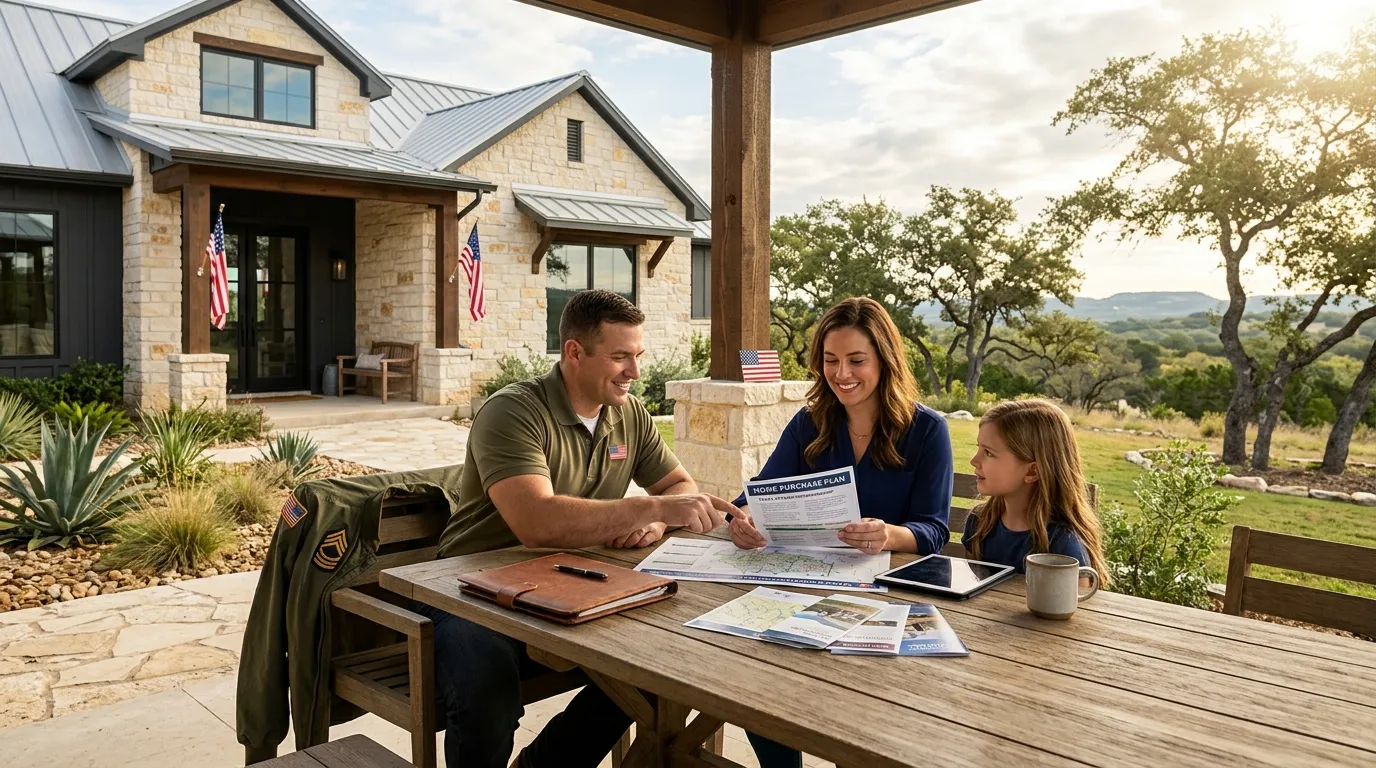
Moving to Texas as a veteran or military family, and trying to buy without making an expensive fast decision?
Quick Answer
A smart Texas veteran home buying plan starts before you tour homes. Confirm your VA entitlement and funding-fee status, build your budget around full monthly payment and cash-to-close, then narrow neighborhoods by commute, schools, and future flexibility before the PCS timeline gets tight.
If you want a veteran-focused plan for budget, timing, neighborhood fit, and offer strategy, Cody Posey Real Estate can help you map that out before you waste time on the wrong house or the wrong location.
The Complete Picture
If you are active duty, separating, retiring, or buying as a veteran after service, Texas can make a lot of sense. The problem is that many military buyers approach the move like a sprint. They get the pre-approval, pull up listings, and start trying to win a house before they have really answered the bigger questions: What monthly payment still feels comfortable after taxes and insurance? Which neighborhoods actually fit the duty-station commute? What school setup makes sense for this season? And if orders change again in a few years, will this home still be a smart hold, resale, or rental candidate?
That is where the process either gets calm or chaotic. VA financing is usually not the fragile part. The fragile part is trying to make big decisions too fast, especially when PCS timing, travel, temporary lodging, school enrollment, and daily-life logistics are all happening at once. The buyers who feel most in control are usually the ones who treat the purchase like a sequence of decisions, not one giant leap.
Official VA guidance still gives military buyers a strong edge in 2026. If you have full entitlement, VA.gov explains that you do not have a loan limit in the way most buyers assume, though the real ceiling still depends on lender approval, your income and debts, and the appraisal. That is good news, but it should not trick you into shopping at the top of what a lender says is possible. In real life, the best target is usually what keeps your payment manageable and your move flexible.
For Texas buyers, that payment-first approach matters even more. I tell people all the time that the listing price is only part of the story. Property taxes, homeowners insurance, and HOA dues can change the real affordability picture fast. If you are moving from a lower-tax state, that adjustment can feel bigger than expected. That does not mean Texas is a bad move. It just means the budget needs to be built correctly before you fall in love with a house.
Key Insights
If you want the cleanest path forward, focus on the decisions that remove uncertainty early. These are the areas that matter most for military and veteran buyers trying to move quickly without buying recklessly.
-
Confirm your VA benefit details before you build your search
Your Certificate of Eligibility is not a minor admin step. It tells your lender how your entitlement stands today, and VA guidance makes it clear that full entitlement and partial entitlement create different planning realities. If you have full entitlement, the usual county-limit anxiety is mostly noise. If you have partial entitlement, the 2026 FHFA baseline limit matters much more because it can affect how much you can buy with zero down. Either way, clarity first is better than discovering a financing wrinkle after you are emotionally attached to a home.
The funding fee question matters just as much. VA.gov says the purchase funding fee is 2.15% for first use with less than 5% down and 3.3% for subsequent use with less than 5% down, with lower percentages for larger down payments and exemptions for certain qualifying disability-related situations and some surviving spouses. That is not trivia. It changes your cash-to-close plan, your financed balance, and sometimes your confidence level. I would rather see a buyer confirm that at the start than untangle it in the last week before closing.
-
Shop by full payment and cash-to-close, not just price
Military buyers are often told, correctly, that VA loans can be zero down. The mistake is hearing that as zero stress or zero cash needed. Inspections, earnest money, lender fees, prepaid items, taxes, insurance, and sometimes HOA setup costs still exist, and those numbers matter even more when you are also paying for a move, storage, travel, or short-term housing. A great lender quote should show you the whole picture, not just the loan amount.
This is where the right-fit next step is usually a veteran-focused home buying plan, not more browsing. If we know your comfort-zone payment, expected cash-to-close, and timeline, we can point your search toward the right pockets from day one. If you are still in the early phase, start by browsing New Braunfels area listings to get a feel for price bands, then pressure-test the real payment before assuming any one home is a fit.
-
Neighborhood fit is really commute fit, school fit, and future-exit fit
One of the most common mistakes military households make is treating every home in the broader San Antonio, New Braunfels, Cibolo, Schertz, Seguin, and Hill Country corridor as basically interchangeable. They are not. A home that looks perfect online can create a frustrating daily drive, an awkward school plan, or a maintenance burden that feels a lot less charming once the move settles down. Your routine matters more than the listing photos.
That is why I like to filter neighborhoods through daily life first. Where is the duty station or civilian job? How much drive time feels sustainable? Are you trying to optimize for schools, access to medical care, quicker airport runs, newer construction, lower maintenance, or a future resale audience? If you want a clearer sense of how I think through local fit, learn about my approach and then we can narrow your shortlist based on your real routine, not generic hype.
-
Fast moves need cleaner homes and cleaner timelines
The VA appraisal is not the enemy. In most cases, the real problem is a weak timeline or a property with avoidable condition issues. When a buyer is already working against travel deadlines, report dates, or family logistics, it usually makes sense to favor homes that are more likely to appraise and close cleanly. That means paying attention to obvious repair exposure, deferred maintenance, and anything that could trigger a repair debate right when you need the deal to stay on track.
Older homes can absolutely still be the right move, and I am not saying veteran buyers should only buy new construction. I am saying the house and the timeline need to match. If the timeline is tight, the smartest house is often the one with fewer surprises. If the property is more complex, then the contract needs more breathing room. The mistake is mixing a high-friction property with a compressed schedule and hoping it all magically works out.
-
Do not ignore your next move while making this one
A lot of military buyers make decisions as if this is the forever home, then orders change, priorities change, or the family needs change sooner than expected. The better question is not just, “Do we like this home?” It is also, “Will this still make sense if we need to sell, rent, or pivot in a few years?” A smart veteran home buying plan includes an exit strategy before you ever go under contract.
That means thinking about neighborhood desirability, maintenance load, layout usefulness, and what the next buyer will care about later. Sometimes the right house is not the flashiest one. It is the one that protects your options. If you want help reading that tradeoff in plain English, Cody Posey Real Estate can walk you through the pocket-by-pocket pros and cons.
Market Reality
Here is the honest version of the 2026 market for military buyers in this part of Texas. Conditions are more negotiable than the peak frenzy years, but that does not mean every listing is a bargain or every seller is easy. Some homes still move quickly, especially when they are well-maintained, well-located, and priced cleanly. Other homes sit longer because buyers are more payment-sensitive and more selective than they were a few years ago. That is actually useful if you know how to read it.
For veteran buyers, a calmer market can create room to negotiate repairs, credits, or terms that reduce pressure on your cash-to-close. That matters when you are balancing a move and trying to keep reserves intact. But the biggest win is not just saving a few thousand dollars. The biggest win is reducing uncertainty. If a seller is willing to work with your timing or help with closing-cost structure, the whole transaction becomes easier to manage.
The flip side is that buyers can get lulled into thinking they have all the time in the world. Then they start touring too broadly, second-guessing every neighborhood, and waiting until the move is close before making real decisions. That is when stress spikes. A more balanced market still rewards clarity. When you know your payment, your preferred commute, your non-negotiables, and your timeline, you can act quickly without acting blindly.
One more reality check: “veteran-friendly” is not just about the loan type. It is about whether your team understands military timing, remote decision-making, and the practical difference between a house that looks good online and a house that supports your life. I think that is what buyers actually want, especially when they are moving fast. Not a motivational speech. Just a straightforward plan that helps them avoid the expensive mistakes.
Action Steps
- Get your lender to confirm three things this week: your COE status, your funding-fee status, and a realistic cash-to-close estimate that includes taxes, insurance, and HOA if applicable.
- Pick a true monthly comfort number. Not the maximum a lender says you can qualify for. The number that still feels stable if the move gets messy or life changes in 12 to 24 months.
- Build a neighborhood shortlist around routine. Start with commute targets, school priorities, maintenance tolerance, and your likely hold period. If you are still broad, explore local neighborhoods before you let listing photos drive the whole search.
- Match the house to the timeline. If your schedule is tight, lean toward homes with fewer obvious condition risks. If you want an older or more unique home, build extra time into your inspection and negotiation plan.
- Book a veteran-focused buying consultation before you write. The smartest time to pressure-test your budget, neighborhood fit, and offer structure is before you are emotionally committed. If you want that kind of plan, Cody Posey Real Estate is the right next step.
Closing
If you are a veteran, active-duty buyer, or military household planning a move in Texas, you do not need more noise. You need a clean plan that matches your budget, your timeline, and the way you actually live. That usually means clarifying the financing first, then choosing the right neighborhood pockets, then writing a contract that fits the move instead of fighting it.
If you want help building that plan, I can help you sort through commute tradeoffs, school and neighborhood fit, cash-to-close expectations, and the offer strategy that makes the most sense for your timeline. Start with Cody Posey Real Estate, and we will build a veteran-focused home buying plan around your next move.
Ready to talk strategy? Call Cody Posey Real Estate at 830.360.5569.
Sources: VA.gov, VA Home Loan Entitlement and Limits; VA.gov, Funding Fee and Loan Closing Costs; FHFA, 2026 Conforming Loan Limit Values; Texas Veterans Land Board.