
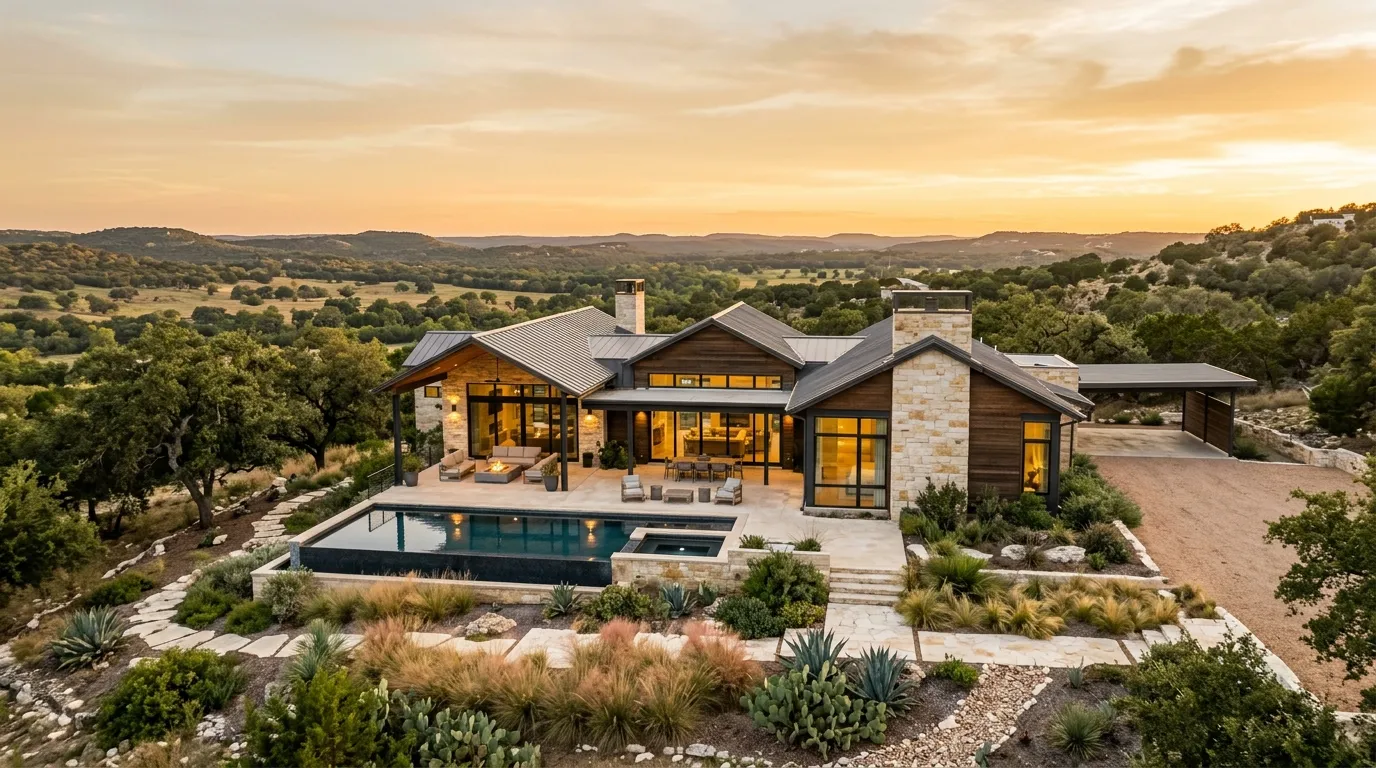
Should you buy a second home in Texas Hill Country in 2026?
Quick Answer
Buying a second home in the Texas Hill Country in 2026 can make sense if you start with the boring math first: financing terms, property taxes without a homestead exemption, and whether you will actually use it enough to justify the carrying cost. Rates are still a real part of the decision. One Texas-market guide cited a 6.54% 30-year fixed rate as of May 2026, and second-home pricing can be higher depending on down payment, credit, and lender rules. Use the lifestyle upside to choose the area, but use the monthly payment and "non-homestead" tax reality to choose the budget. For expert updates, contact Cody Posey Real Estate.
What does the Hill Country market feel like going into summer 2026?
If you are considering a second home, your first instinct is usually lifestyle. River weekends. Lake time. A place to reset without being stuck in a condo tower. That part matters, but 2026 buyers are also walking into a market that has been uneven by pocket and price point. Some neighborhoods still feel tight. Others give you room to negotiate, especially when resale listings are competing with builder incentives.
Here is the practical lens I use with my New Braunfels relocators: don’t ask “Is it a buyer’s market?” Ask “Is my exact price band getting price cuts, and what does that do to my leverage?” That is especially true for second homes because you are often picking from higher-maintenance properties (views, acreage, older homes, waterfront-adjacent) where condition and insurance costs can swing your monthly number.
One statewide indicator is supply. A Texas-market summary cited 10.07 months of supply as of March 31, 2026, along with a median 82 days on market. That does not mean your specific Hill Country area will behave exactly like the state. It does mean you should expect more listings to sit long enough for you to negotiate, and you should be ready to walk away when the numbers do not work.
If you want a fast reset on how Texas contracts work, re-read Texas option period basics for New Braunfels buyers. Second-home buyers make the same expensive mistake first-time buyers do: they fall in love with the view and forget the exit plan in the contract.
What costs surprise second-home buyers in the Hill Country?
The tax bill is different when it is not your homestead. A second home generally does not get the same homestead exemptions you would use on your primary residence, so you need to run your estimate with that in mind. In Comal County, the appraisal district explains the homestead exemption concept with simple examples, and it also notes that homeowners who qualify for the homestead exemption receive at least a $140,000 exemption for school district taxes. That is a big deal. If the property is not your homestead, you should not assume you will get those savings. This is one of the most common “we didn’t know” moments I see when someone is moving from Austin or out of state and buying a weekend place.
Insurance and water risk can be the quiet deal-killer. Hill Country properties can come with flood-map questions, wind and hail exposure, older roofs, and longer response times for some services. I am not saying “avoid” anything. I am saying you should ask the questions early. For river-adjacent or low-water crossings, you want to know what insurance will actually cost before you anchor your budget. If you are eyeing Canyon Lake because it feels like a vacation every weekend, also read Canyon Lake water levels and the real estate impact so you do not buy based on a photo from a wet year.
Short-term rental plans need a reality check. A lot of second-home buyers start with “We’ll use it sometimes and rent it out the rest.” That can work, but only if the property, HOA, and local rules allow it and the numbers still work when you are not booked. Before you lean on STR income to justify the purchase, build a conservative plan that assumes slower seasons, higher maintenance, and a management fee. If the purchase only works in the best-case scenario, it is not a plan.
If you treat the monthly cost like a payment you will make even in the off-season, you will make better decisions. That means you pick a budget you can carry comfortably, then you only shop the homes that fit that number.
Want a second home that actually fits how you live, not just what looks good online?
I’ll help you compare Hill Country areas and build a realistic monthly-cost plan before you start touring properties.
Call Cody Posey Real Estate at 830.360.5569 · Compare Hill Country areas that fit how you live
How do you choose the right Hill Country area for a second home?
I like to start with your use pattern. Is this a true weekend place you will drive to twice a month, or is it a future primary home you will “test drive” for a year? Those are different decisions. A true weekend place should be easy to reach, easy to lock up, and located where you will actually go. A future primary should be chosen for daily-life logistics: commute routes, groceries, medical, and how you feel on a random Tuesday, not just a Saturday.
Here is my “only a local would say this” moment: out-of-town buyers often underestimate what IH-35 feels like at the wrong time, especially between San Antonio and New Braunfels. If your second home is supposed to reduce stress, but you are sitting in traffic every Friday at 4:30, you will stop using it. When we build a move plan, I ask clients to do one test drive in the exact time window they would typically travel. It sounds obvious, but it changes what areas actually fit.
Next, match the property style to the maintenance you want to live with. Hill Country acreage is a different lifestyle than a newer neighborhood home, and it comes with different questions (water source, septic, fencing, wildlife, access, and who maintains what). If acreage is on your short list, read buying acreage in Texas Hill Country: what to check (2026) and decide whether you want a place to relax or a second job.
If you are not sure which pockets make sense, start with a short list first and then shop inside it. Narrow the areas first, then shop inside that lane. That is how you avoid the common trap of shopping “everywhere” and never getting confident enough to move forward.
What is the safest step-by-step plan to buy a second home in 2026?
Step one is deciding what the home is for. If it is lifestyle only, your budget should be based on what you can comfortably carry even if it never produces a dollar of rental income. If it is a hybrid second home and STR, your plan should still cash-flow under conservative assumptions. If it is a future primary, you need a plan for timing and how you will sell or convert your current home.
Step two is building the true monthly number. That means payment, insurance, HOA (if any), utilities, and property taxes with the right exemptions applied or not applied. Comal County’s tax office also notes that it maintains over 122,000 tax accounts and collects and disburses over $164 million in property taxes annually. The point is not the big number. The point is that property taxes are a real monthly cost here, and second-home buyers should treat them like a payment, not a once-a-year surprise.
Step three is writing an offer with an exit plan. That is where the option period matters, inspections matter, and due diligence matters. You can love the property and still protect yourself. This is exactly the kind of conversation I have with clients before we even schedule showings, because the contract strategy needs to match the property type.
If you want, I’ll help you build the plan before you tour. That way you are shopping with a clear budget, a tight area list, and a contract strategy that fits the property.
A quick second-home checklist before you tour
- Decide the purpose: lifestyle-only, hybrid STR, or future primary.
- Set your budget from the true monthly cost, including taxes without homestead assumptions.
- Pick 3–5 target areas based on how you will actually use the home and how you will drive to it.
- Confirm property constraints early: HOA rules, STR rules, water/septic, and insurance quotes.
- Write offers with an exit plan: option period, inspections, and timelines that match the property.
In Closing
If you are planning to buy a second home in the Hill Country in the next 30–180 days, the next step is not touring 20 homes. It is narrowing the areas and building a monthly-cost plan that still works when life gets busy.
Call Cody Posey Real Estate at 830.360.5569 and I’ll map the right pockets for your use pattern, run the numbers, and help you buy with confidence instead of guesses.
Ready to talk strategy? Cody Posey Real Estate at 830.360.5569.
Sources: Texas Real Estate Research Center (TAMU) — Texas Housing Insight (Feb 2026) · ManageCasa — Texas Housing Market 2026 Guide (rate, supply, DOM) · Comal Appraisal District — Exemptions (homestead examples) · Comal County Tax Office — Property tax info