
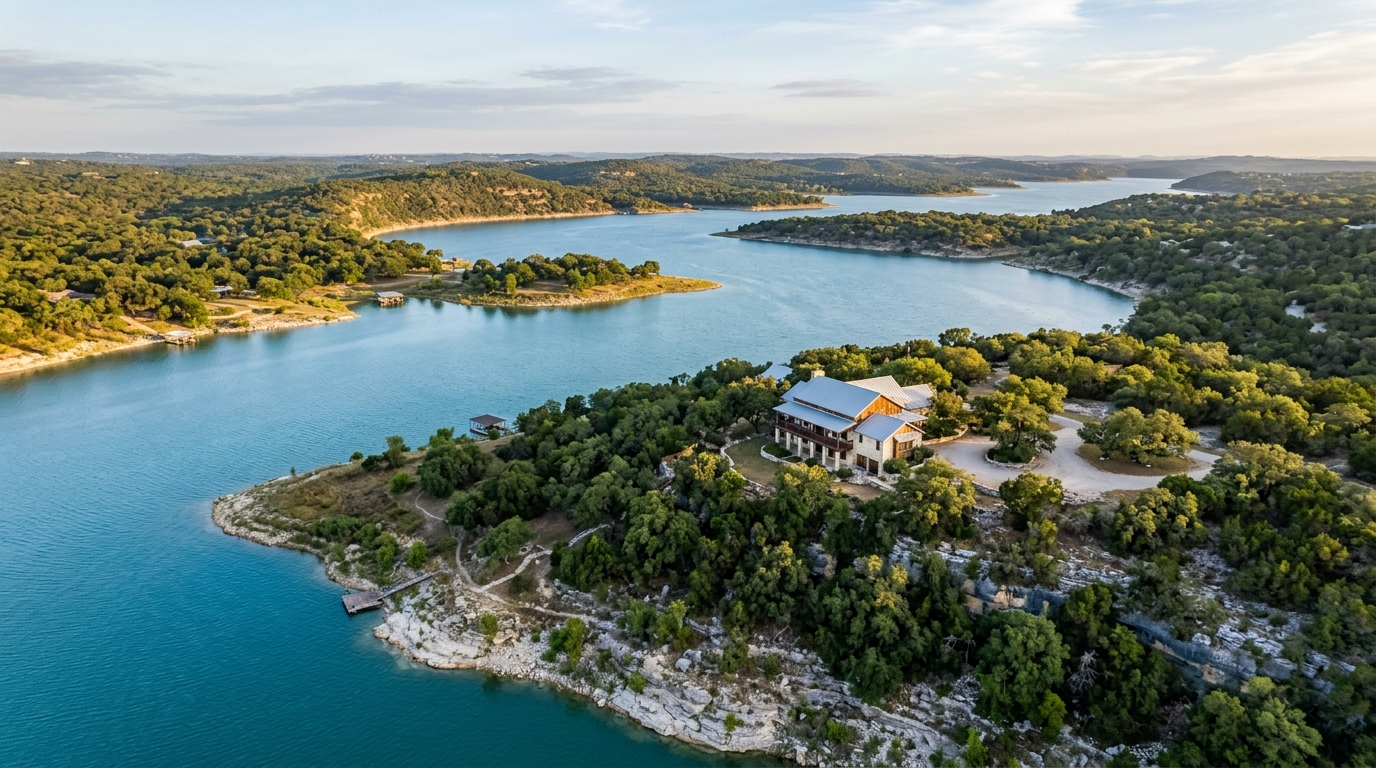
What short-term rental rules should Canyon Lake buyers verify in 2026?
Quick Answer
Canyon Lake does not give buyers one simple, area-wide yes or no on short-term rentals. A property may be affected by Texas hotel occupancy tax rules, local hotel tax, subdivision deed restrictions, HOA rules, septic capacity, insurance requirements, and the exact government jurisdiction tied to the address. Texas defines a short-term rental for state hotel occupancy tax purposes as a residential rental of 29 days or less, and the state hotel occupancy tax rate is 6%. For expert updates, contact Cody Posey Real Estate.
Why is there no single Canyon Lake short-term rental answer?
Canyon Lake is a broad market, not one uniform subdivision or city jurisdiction. Buyers commonly use the name to describe properties around Sattler, Startzville, Fischer, Spring Branch, and other parts of the lake area. Two homes that look close together on a map can have different deed restrictions, HOA documents, utility setups, septic limitations, flood considerations, and local tax obligations. That is why a listing description that says "STR allowed" should be treated as a starting point for verification, not the final answer.
The first distinction is whether the property is inside an incorporated city, in unincorporated Comal County, or affected by another local authority. The next distinction is private restrictions. A government may not prohibit a particular use, yet recorded deed restrictions or enforceable HOA rules may still limit minimum lease terms, guest activity, parking, signs, or commercial use. Those private documents can matter just as much as a public ordinance when you are deciding whether a home fits your plan.
I see relocating buyers make the same Canyon Lake mistake: they shop by distance to the water and assume the rules follow the shoreline. They do not. The real dividing lines are the parcel, subdivision documents, taxing jurisdictions, access, wastewater system, and insurance profile. This is one reason my guide to living in Canyon Lake year round emphasizes the practical differences between lake-area pockets instead of treating the market as one neighborhood.
Your goal should be to establish a documented chain of answers before your option period expires. Confirm the address and legal description, identify the governing entities, obtain current restrictions directly from reliable records, and ask the appropriate tax offices how registration and remittance work for that property. If the rental plan is important to your purchase, put the verification work beside the inspection and financing work, not after closing.
Which Texas tax rules apply to a Canyon Lake short-term rental?
Texas hotel occupancy tax is the clearest statewide requirement to put on your checklist. The Texas Comptroller says the tax applies to short-term rentals of residential property, including houses, condominiums, and apartments rented for 29 days or less. The state hotel occupancy tax rate is 6% of the lodging charge. Local hotel occupancy taxes may also apply, and those are administered by the relevant local government rather than the Comptroller.
Do not assume a booking platform handles every tax obligation. The Comptroller explains that a platform may collect and remit state hotel occupancy tax when it has agreed to do so for the owner. When it does not, the owner remains responsible. Even when a platform handles the state portion, the owner should contact the city and county associated with the property to determine whether local hotel occupancy tax must be registered, collected, and reported separately.
This is where projected gross revenue can mislead a buyer. Nightly rate multiplied by expected booked nights is not net income. You still need to account for state and local taxes, platform fees, cleaning, utilities, management, repairs, reserves, insurance, furnishing replacement, lawn or septic service, and financing. If you are comparing a vacation-rental plan with personal use, the operating assumptions should be conservative enough to survive slower months and unexpected maintenance.
Tax treatment can also depend on facts beyond hotel occupancy tax, including personal use and how the property is operated. I can help you compare properties and build the real-estate side of the decision, but a CPA or qualified tax professional should confirm your reporting and income-tax treatment. The key buyer move is to identify those questions before you rely on rental income to justify the purchase.
Trying to compare Canyon Lake with other Hill Country areas without guessing about rules and operating costs?
I will build a property and area shortlist around your budget, intended use, access needs, and tolerance for rental restrictions.
Call Cody Posey Real Estate at 830.360.5569 · Compare Hill Country areas that fit how you live
What property documents and physical limits should buyers check?
Recorded restrictions come first. Ask for the declaration, amendments, rules, rental policies, and any available resale certificate or owner-association package. Search specifically for minimum lease terms, limits on transient occupancy, registration requirements, parking rules, guest caps, nuisance provisions, and enforcement authority. Do not rely only on a seller's past use or a neighbor's operation. A prior owner may have operated without approval, may have different grandfathered rights, or may simply never have been challenged.
Wastewater capacity matters. Many Canyon Lake-area homes use on-site septic systems. Bedroom count, permitted system capacity, actual sleeping arrangements, maintenance history, and guest volume can affect whether your operating plan is realistic. A house marketed with extra sleeping areas is not automatically approved for the occupancy you have in mind. Confirm records and condition with the relevant authority and qualified inspectors during due diligence.
Access and hazard costs change the math. Review flood maps, drainage, road access, driveway grade, wildfire exposure, water source, internet service, and emergency access. Lake view and lake access are different features, and water conditions can change how buyers perceive both. My breakdown of Canyon Lake water levels and real estate impact explains why you should value the house, lot, access, and long-term usability separately instead of paying for a view as though it guarantees a specific recreation experience.
Insurance needs an address-specific quote. A standard owner-occupied policy may not cover short-term rental activity. Ask an insurance professional about commercial or landlord coverage, liability, guest-caused damage, loss of rental income, flood coverage, watercraft exposure, and any occupancy restrictions. Get the quote before the option period ends when possible. The premium and deductible can be materially different from the estimate used in a generic online calculator.
Finally, inspect the home as a home, not only as a revenue concept. Roof age, HVAC capacity, decks, stairs, railings, docks, retaining walls, septic components, and deferred maintenance can turn an appealing gross-income projection into a poor ownership experience. This is exactly the kind of question I walk clients through when we compare buying a second home in the Texas Hill Country with buying a property that must perform as an active hospitality business.
How should you compare Canyon Lake with other Hill Country areas?
Start by deciding what the property must do for you. A personal retreat with occasional rental dates is a different purchase from a property expected to cover a large share of its monthly carrying cost. A future primary residence has another set of priorities. Write the dominant use first, then compare homes against that use. This keeps a promising view or polished rental projection from pulling you away from the reason you are buying.
Next, compare complete monthly and annual costs. Include principal and interest, property taxes, insurance, HOA dues, utilities, internet, septic or well expenses, landscaping, cleaning, management, supplies, repairs, capital reserves, and hotel occupancy tax administration. If rental income is part of qualification, ask your lender what documentation and history they require. Do not assume projected nightly income will be counted the way you expect.
Then compare the lifestyle tradeoffs across the Hill Country. Canyon Lake may offer more lake-oriented property choices and a rural feel in many pockets, while New Braunfels, Bulverde, Spring Branch, Seguin, or the Cibolo-Schertz area may offer different access, housing stock, utilities, commute patterns, and local rules. There is no universal winner. The better fit depends on how often you will use the property, where you need to drive, how much operational work you accept, and whether rental use is essential or optional.
My practical advice is to build two shortlists: properties that work without short-term rental income, and properties where verified rental use improves an already-sound purchase. If a deal only works when every optimistic booking assumption is true, it is not giving you much room for taxes, repairs, rule changes, or slower demand. A local property comparison can help you see where the same budget buys a different combination of access, condition, restrictions, and ongoing cost.
What should you verify before the option period ends?
- Confirm the property's legal description, city or county jurisdiction, taxing entities, utilities, and subdivision.
- Obtain current deed restrictions, HOA documents, amendments, and written rental policies from reliable records.
- Ask the Texas Comptroller and applicable local tax offices who must register, collect, and remit hotel occupancy tax.
- Verify septic records, permitted capacity, flood information, access, inspections, and address-specific insurance coverage.
- Recalculate the purchase using conservative revenue, complete operating expenses, repair reserves, and lender guidance.
In Closing
If you are considering a Canyon Lake or Texas Hill Country property in the next 30 to 180 days, the next step is to compare specific addresses by intended use, restrictions, access, condition, and complete ownership cost.
I will help you narrow the right areas, organize the property questions, and compare the tradeoffs before you spend your option period chasing answers.
Ready to talk strategy? Cody Posey Real Estate at 830.360.5569.
Sources: Texas Comptroller: Hotel Occupancy Tax · Texas Comptroller: Hotel Occupancy Tax FAQs · Texas Tax Code Chapter 156: Hotel Occupancy Tax · Texas Tax Code Chapter 352: County Hotel Occupancy Taxes