
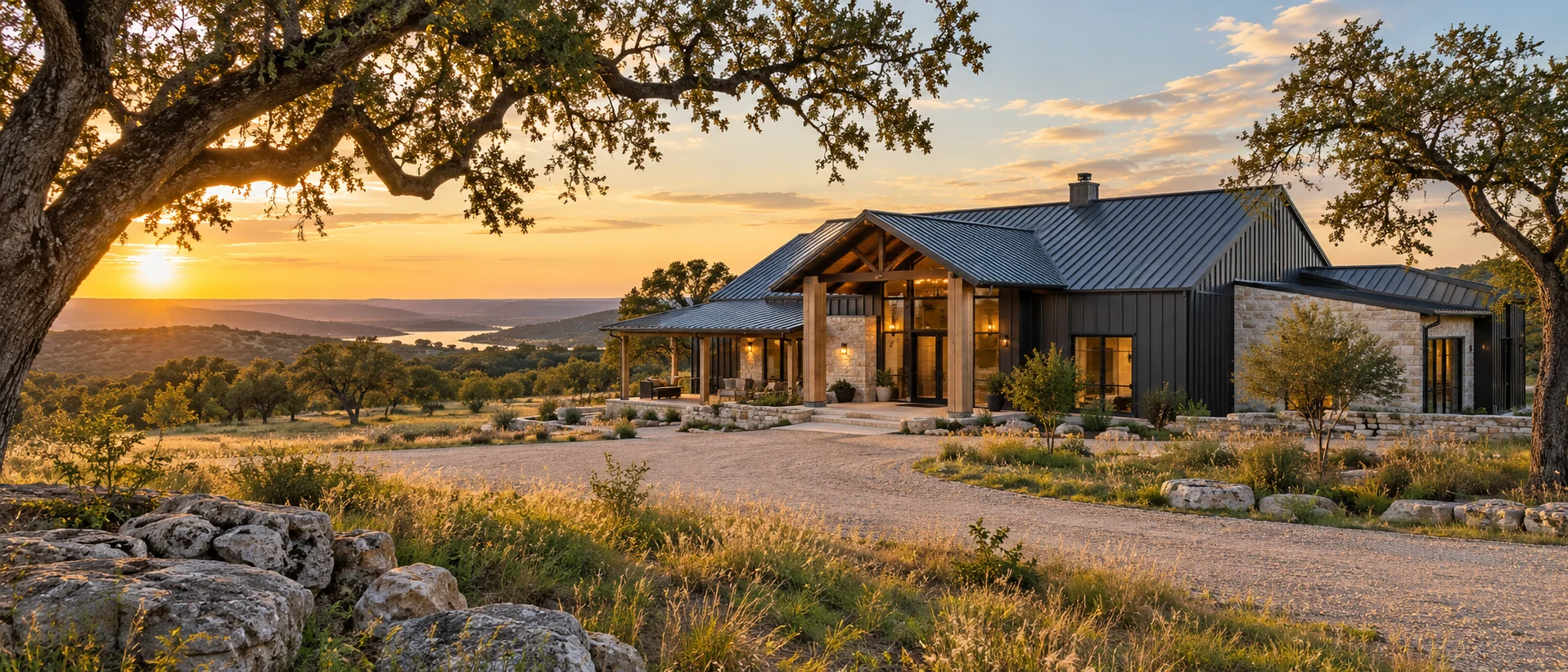
The barndominium dream usually starts the same way: a piece of Texas land, a wide-open sky, and a floor plan sketched on a napkin. What it should start with is a checklist — because the land you buy determines what you can build, what it will cost, and whether the project ever gets off the ground.
I've spent the last year publishing 2026 cost and planning guides for Texas barndominium builds, and the single most expensive mistake I see buyers make isn't choosing the wrong builder or the wrong finishes. It's buying the wrong land. Here are the ten things to verify before you close.
1. Deed Restrictions: Can You Even Build a Barndominium Here?
This is the number-one deal killer, and it surprises more buyers than anything else on this list. Many Texas subdivisions — even rural ones — carry deed restrictions that dictate minimum square footage, approved exterior materials, roof pitch, or outright prohibit metal buildings.
A "barndominium" with metal siding may violate a restriction requiring 80% masonry exteriors. Some restrictions ban buildings that "resemble barns or agricultural structures" — which is, of course, the entire aesthetic.
What to do: Get the recorded deed restrictions before you make an offer, not after. Read them yourself, then have your agent confirm your planned build complies. If the language is ambiguous, get a written opinion — "probably fine" from a seller is worth nothing at the permit counter.
2. Septic Feasibility: The Perc Test That Decides Everything
Outside city sewer service — which describes most barndominium land in Texas — you're installing an on-site sewage facility (OSSF). And not every parcel qualifies.
Texas requires a site evaluation by a licensed site evaluator or engineer before a septic permit is issued. They'll check soil type, soil depth to restrictive horizons, groundwater levels, and slope. Heavy clay soils, shallow rock, or high water tables may require a different system design or affect feasibility. Get a site-specific evaluation and written installation estimate. TCEQ explains the evaluation and permit process.
What to do: Make your offer contingent on a satisfactory septic site evaluation. Budget the engineered-system number, not the conventional one, until the evaluation says otherwise. And confirm setback distances: septic components must sit specific distances from wells, property lines, and waterways, which eats into your usable building envelope.
3. Setbacks and Easements: Your Buildable Area Is Smaller Than You Think
The parcel is 5 acres. Your buildable area might be 2. Know the difference before you fall in love with a floor plan.
Setbacks — the required distance between your structure and property lines, roads, and waterways — vary by county and by subdivision. Utility easements, drainage easements, and pipeline easements further carve out no-build zones. A 30-foot pipeline easement running diagonally across your "perfect" homesite can kill the layout entirely.
What to do: Get a survey showing all easements, and map your setbacks onto it. Walk the property with the survey in hand. The prettiest spot on the land is often sitting inside an easement.
4. Floodplain and Drainage: Check the Maps, Then Check the Ground
Some rural Texas acreage sits in or near a FEMA floodplain. Federally regulated lenders generally require flood insurance for a building in a Special Flood Hazard Area when applicable federal requirements apply; ask your lender and insurance agent about the specific property. FEMA explains the requirement.
But the maps don't tell the whole story. Visit after a heavy rain if you can. Look for standing water, erosion patterns, and how neighboring properties drain. Your barndominium's slab is only as good as the water management around it.
What to do: Pull the FEMA flood map for the parcel (your agent can do this in minutes). If any portion is in a floodplain, price the insurance before you commit. And budget for proper grading and drainage — rural Texas clay doesn't forgive poor site prep.
5. Water: Well, Municipal, or Neither
Three scenarios, three very different budgets:
- Municipal water available: Best case. Confirm tap fees and connection costs with the provider — tap and connection costs vary by provider and parcel.
- Well required: Get a written estimate for drilling, the pump, and the pressure system. Depth and water quality vary enormously by county — talk to neighbors about their wells before you drill yours.
- Neither readily available: Water hauling or rainwater collection. Workable, but it changes your build math and your daily life.
What to do: Call the local water district or groundwater conservation district before closing. Ask about tap availability, tap fees, well depth averages in the immediate area, and any production limits or permits required.
6. Zoning, ETJ, and County Rules
Unincorporated Texas land famously has minimal zoning — but "minimal" isn't "none." Check:
- ETJ (Extraterritorial Jurisdiction): Land near a growing city may fall under its ETJ. Applicable subdivision, development, and other rules depend on the jurisdiction and current law; ask the city and county which rules apply to the specific parcel.
- County development permits: Many Texas counties now require a development permit for new construction, even without formal zoning.
- Subdivision regulations: If the land was recently subdivided, county platting rules apply.
What to do: Call the county's development or permitting office with the parcel's legal description. Ask: "What permits does a new single-family residence require on this parcel?" Get the answer in writing or take names and notes.
7. Mineral Rights and Surface Waivers
In Texas, mineral rights are frequently severed from surface ownership — meaning you may own the land but not what's underneath it. A mineral owner (or their lessee) generally has the right to reasonable surface use to access those minerals.
For most residential buyers this never becomes an issue. But verify what you're actually buying: if the seller is reserving minerals, understand what that reservation covers. And check for existing oil, gas, or pipeline leases and easements on the property.
What to do: Review the title commitment, exceptions, survey, and available recorded documents for mineral reservations and leases. A title commitment may not reveal every mineral interest or lease; ask a Texas real estate attorney about any gaps and whether additional research is needed. If there's active production nearby, factor it into your decision the way you'd factor in any neighboring land use.
8. Ag Exemption: The Tax Break That Isn't Automatic
Texas's agricultural valuation ("ag exemption") can cut property taxes dramatically — but it doesn't transfer automatically, and it doesn't apply to every use.
Key facts buyers miss: the land must have history of qualifying agricultural use (typically 5 of the last 7 years), the new owner should contact the appraisal district about an application and continuing eligibility, and the effect of a homesite depends on how the land is used and appraised. A change to nonagricultural use can trigger rollback tax; see the Texas Comptroller’s agricultural appraisal guidance. Buying land "with ag exemption" and keeping it are two different things.
What to do: Ask the seller for the ag valuation history. Call the county appraisal district and ask what it takes to maintain the exemption under your planned use. Budget your taxes without the exemption until it's confirmed — hope is not a financial plan.
9. Access: Legal, Physical, and Practical
Three questions, all essential:
- Legal access: Is there a recorded easement or deeded access to a public road? Landlocked parcels exist, and "the neighbor's always let us through" is not a legal right.
- Physical access: Can a concrete truck, a steel delivery semi, and a crane reach your build site? Barndominium construction involves heavy deliveries. A low-water crossing or a narrow easement road can add logistics costs or make a planned delivery impractical.
- Utilities: How far is the nearest electrical service? Ask the electric provider whether service can be extended and what it would cost for the specific site.
What to do: Drive the access route in a normal vehicle and imagine it in a loaded semi. Get a written quote from the electric provider for service extension. Confirm legal access in the title commitment.
10. Financing: Land Loans Aren't Mortgages
Most barndominium buyers need two financial products: a land loan now, and construction financing later. Land loan down payments, rates, and terms vary by lender, property, and borrower; obtain a written quote before relying on an estimate. Construction loans for barndominiums can be harder to find than for conventional homes — not every lender is comfortable with metal-building residential construction.
What to do: Talk to a lender before you buy the land, not after. Specifically ask about their experience with barndominium construction loans in Texas. For detailed 2026 cost breakdowns — what the land, site work, and build actually add up to — my Texas barndominium cost guide walks through turnkey ranges from $280,000 to $360,000 for a typical 2,000 sq. ft. build, plus the site-work costs buyers forget to budget.
The Bottom Line
Great barndominium projects are made or broken before the first pier is poured. The buyers who sail through construction are the ones who verified the land first — restrictions, septic, setbacks, water, access, and financing, in that order.
If you're shopping for Texas land with a barndominium in mind, work with someone who knows what to look for before you write the offer, not after.
Ready to find the right piece of Texas land? Cody Posey is a New Braunfels-based REALTOR® and 20-year U.S. Army veteran who helps buyers across the Texas Hill Country find land that's actually buildable — restrictions checked, utilities verified, no surprises after closing. Call or text (830) 360-5569 or visit cposeyrealestate.com to start the conversation.
James Hufford runs DFW Barndominium Guide, publishing independent 2026 cost and planning guides for Texas barndominium builds.