
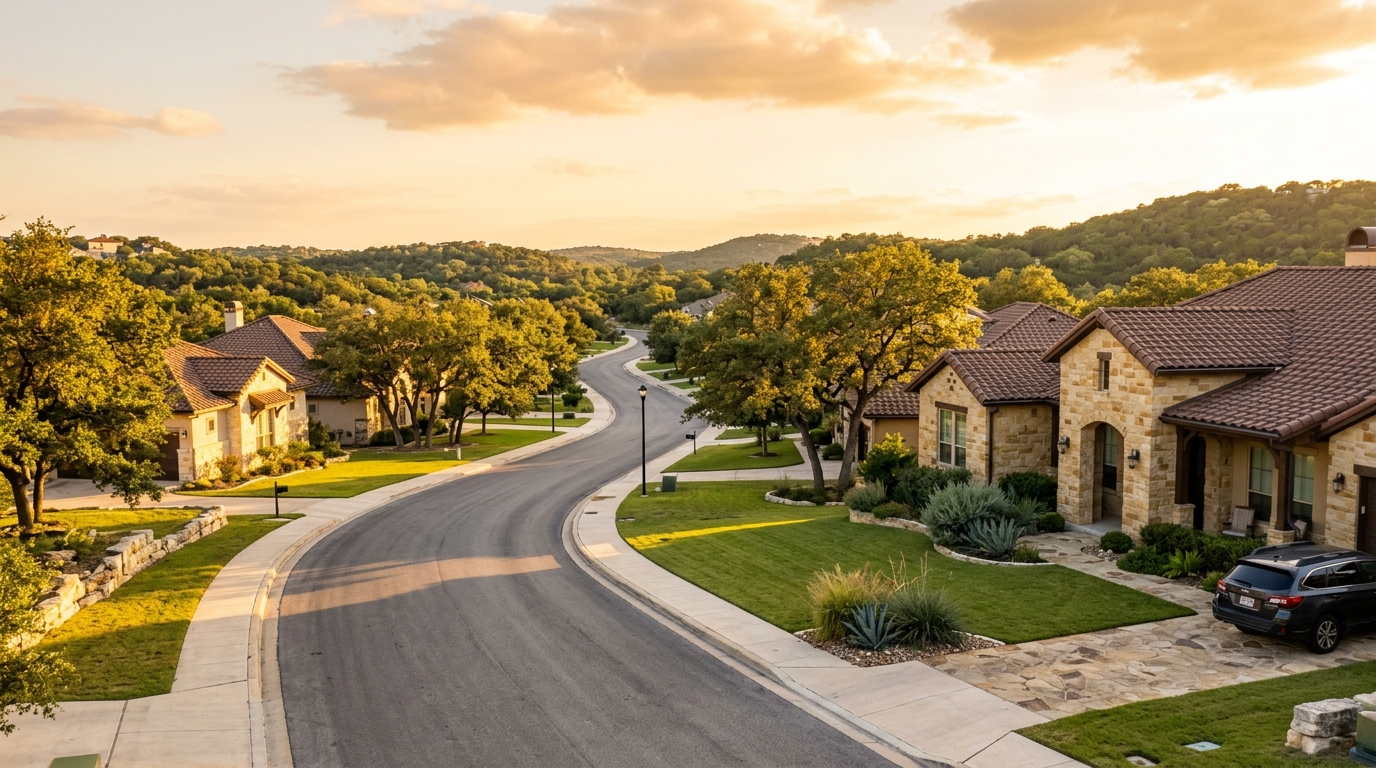
What can your BAH actually buy near JBSA-Randolph in 2026?
Quick Answer
An E-6 with dependents receives $2,094 a month in 2026 BAH at JBSA-Randolph, which fully covers roughly a $195,000 home in the Randolph corridor at current rates — property tax and insurance included. Officers at O-3 and above can stretch to about $200,000–$237,000, while junior enlisted are generally in renting territory. Rates slipped about 3% from 2025, but anyone already stationed at JBSA keeps the higher rate through DoD rate protection.
What Are the 2026 BAH Rates at JBSA-Randolph?
One thing that surprises incoming families: your BAH doesn't change based on which JBSA gate you drive through. Lackland AFB, Randolph AFB, and Fort Sam Houston all sit inside the same Military Housing Area, so one rate table covers all three. What matters is your pay grade and your dependency status — not the name on your orders.
The 2026 rates (effective January 1, 2026) for the San Antonio Military Housing Area:
| Pay Grade | With Dependents | Without Dependents |
|---|---|---|
| Enlisted | ||
| E-1 through E-4 | $1,728/mo | $1,359/mo |
| E-5 | $1,869/mo | $1,500/mo |
| E-6 | $2,094/mo | $1,596/mo |
| E-7 | $2,112/mo | $1,731/mo |
| E-8 | $2,121/mo | $1,920/mo |
| E-9 | $2,157/mo | $1,977/mo |
| Warrant Officers | ||
| W-1 | $2,109/mo | $1,692/mo |
| W-2 | $2,118/mo | $1,917/mo |
| W-3 | $2,130/mo | $1,986/mo |
| W-4 | $2,178/mo | $2,085/mo |
| W-5 | $2,280/mo | $2,097/mo |
| Officers | ||
| O-1 | $1,905/mo | $1,584/mo |
| O-2 | $2,091/mo | $1,827/mo |
| O-3 | $2,127/mo | $2,007/mo |
| O-4 | $2,307/mo | $2,088/mo |
| O-5 | $2,457/mo | $2,100/mo |
| O-6 | $2,475/mo | $2,103/mo |
| O-7 & above | $2,490/mo | $2,112/mo |
Official DoD rates for the San Antonio, TX Military Housing Area (TX285), effective January 1, 2026. DoD publishes one rate for O-7 and above.
A few things jump out. First, the dependent rate kicks in only if you have command-sponsored dependents — a single E-6 reporting to Randolph gets $1,596, not $2,094. That's a $498-a-month difference that changes the entire buying conversation. Second, the jumps between E-5, E-6, and E-7 are meaningful: about $225 more a month from E-5 to E-6. If you're promoting into E-6 during your tour, your buying power materially changes mid-assignment. Third, officer rates flatten noticeably above O-4 — the O-5 to O-7 band moves less than $100 across three grades. If you want the full table in a browsable format, my BAH rates resource page breaks down how the allowance works and how to look yours up.
Why Did BAH Drop in 2026 — and Are You Protected?
DoD recalculates BAH every January using local rental surveys, utility costs, and renter's insurance data for each Military Housing Area. For 2026, the San Antonio MHA came in soft — most pay grades dropped roughly 3% from 2025. An E-6 with dependents went from about $2,154 to $2,094. An E-5 fell from about $1,935 to $1,869. Nobody's favorite news.
Here's the part that matters: rate protection. If you were already receiving BAH at JBSA when the new rates took effect — same location, same dependency status, uninterrupted eligibility — you keep your higher 2025 rate. The drop doesn't touch you. That's DoD policy, designed so families who signed leases or bought homes on the old numbers don't get squeezed by a table change.
Who does NOT get protection? New arrivals. If you PCS'd into Randolph in 2026, you get the 2026 table, full stop. This is the mistake I see most often in PCS season: a family budgets off their sponsor's 2025 LES or off last tour's numbers, then discovers their actual allowance is $60–$90 a month lower than expected. At Texas tax rates, that difference can kill a deal that looked workable on paper. If you're arriving fresh, plan off the current table — and verify your exact rate with finance before you start making offers. The official DoD lookup (linked in Sources below) is the reference; your finance office is the authority.
One more piece of context: DoD designs BAH to cover roughly 95% of median housing costs for each pay grade, with the service member covering the remaining 5% out of pocket. That's the member cost-share built into the program — BAH was never meant to cover 100% of a median rental, let alone a purchase. Knowing that keeps expectations honest before we do the buying math.
How Far Does Each Rank's BAH Go Toward a Mortgage?
This is the real question, so let's run honest numbers. Assumptions, all stated so you can adjust: a zero-down VA loan (no PMI), Freddie Mac's 30-year fixed rate of 7.40% (the October 8, 2026 weekly average), an effective property tax rate of 2.2% (Bexar County), and roughly $380/month for homeowner's insurance — Texas averaged about $4,560 a year in 2026, one of the highest state averages in the country. HOA dues, if any, come on top. The target: the full monthly payment (principal, interest, tax, insurance) at or below your BAH.
At 7.40%, a $195,000 home with zero down runs about $1,350 a month in principal and interest. Add roughly $358 in property tax and $380 in insurance, and you're at about $2,088 — just under an E-6's $2,094 BAH. So here's the rank-by-rank picture:
- E-4 with dependents ($1,728): roughly a $154,000 home is fully covered. In the Randolph corridor, that's a stretch for anything with three bedrooms — townhomes or condos near Converse and parts of Universal City are the realistic zone.
- E-5 with dependents ($1,869): roughly $170,000 fully covered. That sits below most single-family asking prices in Schertz and Cibolo today, which means older inventory in Universal City or Live Oak, or a townhome with low HOA dues.
- E-6 with dependents ($2,094): roughly $195,000–$200,000 fully covered. This is the corridor's sweet spot rank — it brackets well-kept homes in Universal City, parts of Live Oak and Converse, and some new construction in Cibolo's entry-level communities.
- E-7 with dependents ($2,112): roughly $198,000. Functionally the same lane as E-6 — the $18 difference buys almost nothing extra at these rates.
- O-3 with dependents ($2,127): roughly $200,000. Junior officers get a slightly better table than E-6s but face the same corridor pricing reality.
- O-5 with dependents ($2,457): roughly $237,000. That opens Schertz and parts of Cibolo comfortably, plus Garden Ridge on the lower end.
Single members have a much harder path — an E-6 without dependents at $1,596 fully covers only about $139,000, which is not realistic single-family territory in this corridor. For most single junior enlisted and junior officers, renting while banking the difference is the honest recommendation. Two things soften the math: many VA lenders gross up non-taxable BAH by 25% when calculating your qualifying income (ask your lender for their exact factor — it affects approval, not your out-of-pocket number), and Texas waives property tax entirely for 100%-disabled veterans, which can be the single biggest lever a family has. I walk through the full PCS buying process — timelines, VA loan sequencing, and the rent-versus-buy call — in my PCS to Fort Sam Houston guide, which applies equally well to Randolph since the BAH table is the same.
Which Randolph Corridor Neighborhoods Fit Your BAH?
Randolph sits at the northeast edge of San Antonio, and the corridor around it is one of the best value-for-BAH areas in the JBSA footprint. The neighborhoods that military families actually buy in, working outward from the gate:
- Universal City — 5 to 10 minutes to the gate, the closest corridor town. Well-kept 1960s–80s homes in the low-to-mid $200s, with some inventory that still fits an E-6's budget. My Universal City homes guide covers what each rank's BAH buys there block by block.
- Converse — 10 to 15 minutes, slightly more affordable than Universal City, with newer townhome communities and entry-level single-family stock. The best fit for E-5 BAH buyers who want a yard.
- Live Oak — 10 to 15 minutes, a mix of older homes and new construction. Judson ISD. Mid-range pricing that works for E-6s and officers who want more house for the money.
- Schertz and Cibolo — 15 to 25 minutes, the growth corridor. New construction is the draw here, but prices have outrun E-5 and E-6 BAH for most builders — these towns fit O-3 and above comfortably, or E-6s willing to stretch.
- Selma and Garden Ridge — 15 to 20 minutes. Selma is small and convenient to the I-35/Loop 1604 interchange; Garden Ridge leans premium and mostly fits officer budgets.
Commute is the hidden variable. A family chasing $30,000 more house in Cibolo while assigned to Randolph trades 10 minutes for 25 on each leg — and that's before 1604 construction traffic. Map the commute at PCS-season rush hour, not Sunday afternoon.
When Does Renting Make More Sense Than Buying?
Buying isn't the automatic answer, and I'd rather say that upfront than after you've closed. Rent if any of these are true: your tour is two years or less (closing costs won't amortize fast enough); you're unsure you'll stay past the current tour and don't want landlord duty from your next duty station; or your rank and dependency status put your BAH under the corridor's entry-level prices — paying $300 a month over BAH out of pocket for three years is a $10,800 bet on appreciation.
Renting at JBSA also has a floor worth knowing: median rents in the corridor sit close to BAH for most ranks, so you're rarely "throwing money away" relative to what the allowance covers. And there's a legitimate middle path — rent for the first year, learn the neighborhoods, then buy with one year of local knowledge instead of buying blind from 1,500 miles away. Video walkthroughs are fine for narrowing; they're not the same as standing in a driveway at 5 PM on a Tuesday.
How Can You Stretch Your BAH Further?
If the math is close but not quite there, there are legitimate levers:
- Disabled-veteran property tax exemption: Texas waives property tax for 100%-disabled veterans (partial exemptions exist at lower ratings). On a $250,000 home, that can remove $450–$500 a month from the payment — the single biggest BAH-stretching tool in the state.
- Homestead exemption: File it on your primary residence. It won't lower your rate, but it caps annual taxable appraisal growth at 10%, which matters in appreciating neighborhoods.
- Buy the payment, not the price: At 7.40%, a $15,000 price drop saves about $104 a month in principal and interest. Negotiate with the payment in mind — seller concessions toward a temporary rate buydown can do more for your monthly number than the same dollars off the price.
- Gross-up at qualification: If a lender's debt-to-income limit is the blocker rather than your out-of-pocket math, the BAH gross-up (typically 25% on non-taxable income) can move your approved amount. Ask your VA lender before assuming you're capped.
- HOA discipline: A $75/month HOA is $75 off your buying power. In the corridor's townhome communities, HOA dues range from modest to deal-breaking — read the budget before you fall in love with the kitchen.
In Closing
The 2026 BAH table at JBSA-Randolph gives an E-6 with dependents $2,094 a month — enough to fully cover roughly a $195,000 home in the corridor at today's rates, less for junior enlisted, more for officers. The 3% drop from 2025 only affects new arrivals, and the rate table is identical across Randolph, Lackland, and Fort Sam. The move that pays off most is also the simplest: verify your exact rate with finance, run the full payment (taxes and insurance, not just principal and interest), and match the neighborhood to your rank before you fall in love with a house.
If you have orders to Randolph and want someone local to run your rank's real numbers against actual corridor listings, call Cody Posey Real Estate at 830.360.5569 or request your PCS housing strategy session. If you're still mapping the move, the military relocation hub covers PCS timelines, VA loans, and every JBSA corridor in one place.
Sources: DoD BAH Rate Lookup (Defense Travel Management Office); DoD Basic Allowance for Housing Overview; Blue Star Families — 2026 BAH Rates; CollegeRecon — San Antonio 2026 BAH Rates.