
Is the Johnson Ranch MUD tax worth it for Bulverde buyers in 2026?
Quick Answer
For many buyers, the Johnson Ranch MUD tax can be worth it if the community's location, newer infrastructure, amenity package, and home options fit the way they plan to live. The current Johnson Ranch MUD page lists a tax rate of $0.8631 per $100 of assessed value, so this is not a throwaway line item in your payment. Treat it like a monthly carrying-cost decision and compare it against nearby Bulverde choices without the same district cost. For expert updates, contact Cody Posey Real Estate.
What does the Johnson Ranch MUD tax actually pay for?
A municipal utility district is not just an HOA fee with a different name. TCEQ describes a water district as a local governmental entity that provides limited services to customers and residents, and municipal utility districts are one example. In Johnson Ranch, the community's MUD page says the district helps finance and manage infrastructure such as water, sewer, drainage, and roads.
That matters because buyers sometimes look at the tax rate first and stop there. The better question is what you are receiving for the cost and whether those services solve something you would otherwise pay for in a different form. Johnson Ranch's MUD responsibilities listed by the community include water supply and wastewater treatment operated by Guadalupe-Blanco River Authority, stormwater drainage management, maintenance and repairs of district facilities and easements, and access to right-of-way or easement areas when necessary.
For a buyer comparing Johnson Ranch and other Bulverde neighborhoods, this is where the conversation gets practical. A lower tax bill in another area may come with an older system, a different utility setup, private septic considerations, a smaller amenity footprint, or less master-planned infrastructure. A higher tax bill may still make sense if it supports the package you actually want, but it has to be measured against your monthly budget instead of treated like fine print.
How much does the MUD tax change your monthly payment?
The Johnson Ranch community MUD page currently lists the MUD tax rate at $0.8631 per $100 of assessed home value. On a home assessed at $500,000, that rate alone equals about $4,315 per year before considering exemptions, appraisal changes, escrow timing, or any other tax jurisdictions. Spread monthly, that is roughly $360 before your lender calculates the rest of the property tax bill.
That is why I would not let a buyer compare Johnson Ranch to another Bulverde home by purchase price only. A home with the same contract price can feel very different once the full payment includes principal, interest, homeowner's insurance, HOA dues, and all property taxes. Ask your lender to model the full escrow estimate with the actual tax jurisdictions for the property, then compare that number against the homes you would realistically buy instead.
The only Cody-style way to say it is this: I see buyers fall in love with the neighborhood first, then discover the MUD line after they are already emotionally committed. That is backward. In Bulverde, especially around Highway 281 communities, you need to know the tax stack before you decide whether a house is really in your price range. Johnson Ranch is a good example of why the district-by-district details matter more than the county headline.
Also remember that assessed value and contract price are related, but they are not always the same number. A seller may be benefiting from exemptions you will not have right away, or the appraisal district may adjust value after a sale. That does not mean you should panic over every estimate. It means your offer strategy should include a payment check, not just a purchase-price check.
Trying to decide whether Johnson Ranch fits your budget after the MUD tax is included?
Cody will compare Johnson Ranch against nearby Bulverde and Hill Country options using payment, tax load, commute pattern, home style, and resale considerations.
Call Cody Posey Real Estate at 830.360.5569 · Get a Johnson Ranch neighborhood shortlist
When is Johnson Ranch worth the extra carrying cost?
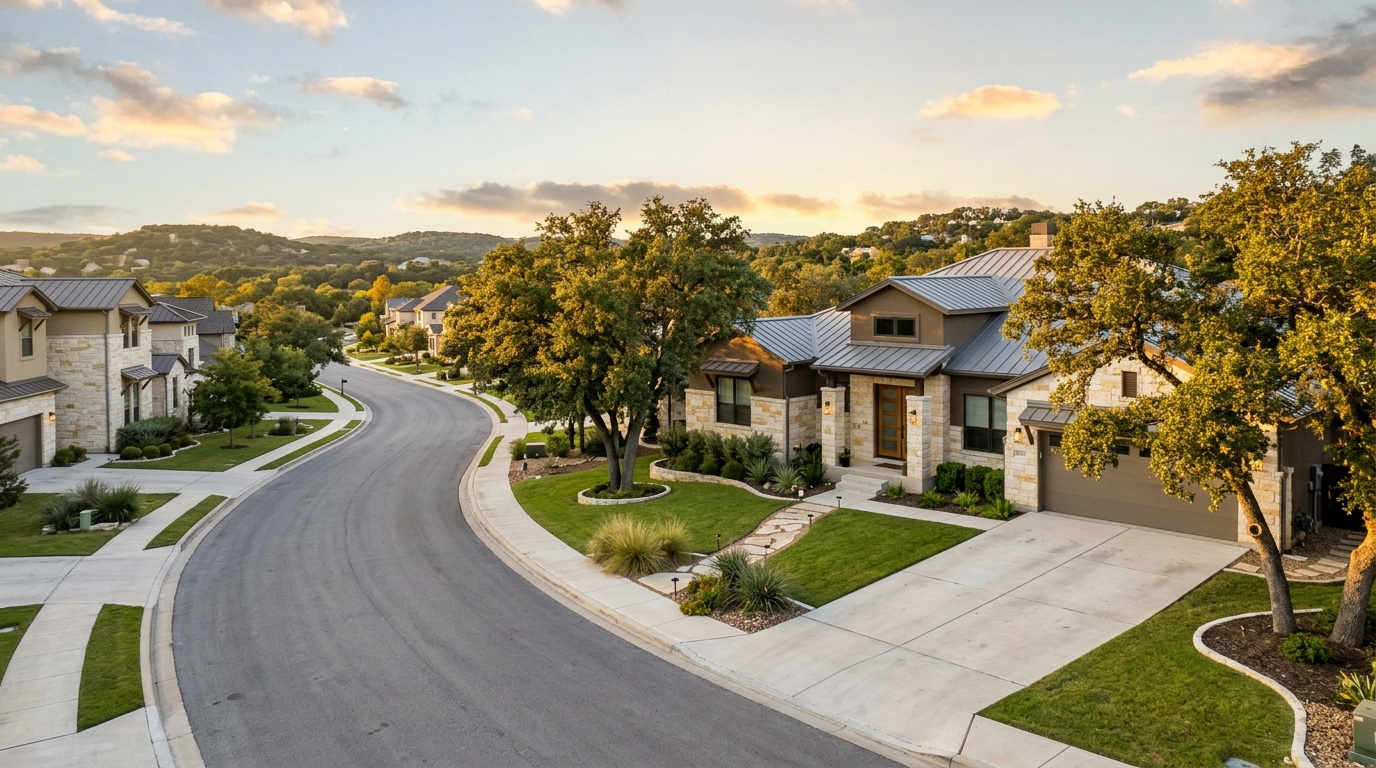
Johnson Ranch starts making sense when the buyer wants a more planned community experience in Bulverde instead of a scattered acreage or older subdivision search. Cody's Bulverde neighborhood page describes Johnson Ranch as a master-planned community with amenities, trails, mature oaks, scenic views, and a range of home and lot options. Those features can be valuable if you want the home search to center on newer construction patterns, neighborhood amenities, and a defined community layout.
It may also be worth the cost for buyers who want Bulverde's Highway 281 access pattern while staying closer to the north Comal County side of the Hill Country. The community's location can work for people comparing New Braunfels, Bulverde, Spring Branch, and north San Antonio drive patterns. The important part is to test the route at the times you actually commute, because a map estimate and a school-year weekday morning can feel very different.
The MUD tax is harder to justify if your budget is already tight at the top of your approval, if you rarely use community amenities, or if you are indifferent between a master-planned setup and a simpler subdivision. It can also be the wrong fit if you would rather put the same monthly dollars toward more land, a lower purchase price, or renovation flexibility. For a similar buyer-fit conversation in a nearby community, Cody's Indian Springs Bulverde buyer check is useful because it shows how two Bulverde-area searches can look close on a map but feel different financially and practically.
The cleanest test is to convert the MUD cost into tradeoffs. If the added tax means you need to lower your target price by $30,000, $50,000, or more to keep the same monthly comfort zone, would you still choose Johnson Ranch over the alternative home? If the answer is yes, the neighborhood may be earning its cost. If the answer is no, the better move may be a different Bulverde pocket with a payment structure that gives you more room.
What should buyers verify before choosing Johnson Ranch?
Start with the tax estimate, but do not stop there. Confirm the current MUD tax rate, the HOA dues, the home's assessed value, any available exemptions, the property's exact taxing entities, and whether the seller's tax bill reflects the same exemption status you will have after closing. The Texas Comptroller explains that local governments collect property tax and set rates, so a buyer's real number comes from the overlapping jurisdictions on that specific property.
Next, confirm utility and resale notice details. The Johnson Ranch page points residents to the official MUD website for tax information, financial reports, water and wastewater details, easement information, and the notice to purchaser for resale. If a property sits inside a district, the paperwork is not just background reading. It is part of understanding what you are buying and what obligations transfer with the home.
Finally, compare Johnson Ranch against the actual alternatives in your price band. A buyer moving in the next 30 to 180 days should look at current listings in Johnson Ranch, nearby Bulverde communities, New Braunfels options, and any commute-sensitive choices near Cibolo or Schertz. Cody's Hill Country area guide is a good starting point for that broader comparison, and the recent Cibolo Valley Ranch MUD tax guide gives another example of how special-district costs can change the decision even when the house itself looks like a fit.
I would also verify condition and future maintenance with the same discipline you bring to the tax estimate. A newer-looking home can still have inspection items, and an amenity-rich neighborhood can still have rules that matter to your plans. If you want a pool, fencing, a shed, solar panels, extra parking, or a specific exterior change, review the HOA documents before assuming the property will work exactly the way you imagine.
In Closing
If you are comparing Johnson Ranch, Bulverde, or nearby Hill Country communities in the next 3 to 6 months, the next step is not guessing whether the MUD tax is good or bad. It is building a neighborhood shortlist that shows the full payment, tax structure, commute pattern, and tradeoffs side by side.
I will help you compare the numbers before you tour, narrow the homes that actually fit your budget, and decide whether Johnson Ranch earns its place on your list. Call Cody Posey Real Estate at 830.360.5569, then use the neighborhood shortlist offer to make the comparison clear before you write an offer.
Ready to talk strategy? Cody Posey Real Estate at 830.360.5569.
Sources: Johnson Ranch Master Community - JR MUD · Johnson Ranch Municipal Utility District · Texas Commission on Environmental Quality - Water Districts · Texas Comptroller - Property Tax Assistance