
Thinking about Cibolo or Schertz in 2026 — how do these I-35 suburbs actually compare, and where's the buyer leverage right now?
Quick Answer
Cibolo and Schertz both sit on the I-35 corridor in Guadalupe County between San Antonio and New Braunfels, and in early 2026 they read as buyers-leaning markets with typical home values clustered in the low-to-mid $300Ks, SCUCISD's TEA-rated “B” schools, and short commutes to JBSA-Randolph. If you're weighing a purchase here, today's elevated days on market and rising inventory mean you can often negotiate price, concessions, or repairs — which is a different story than even 18 months ago. For a data-backed look at your specific neighborhood and timeline, reach out to Cody Posey Real Estate.
The Complete Picture
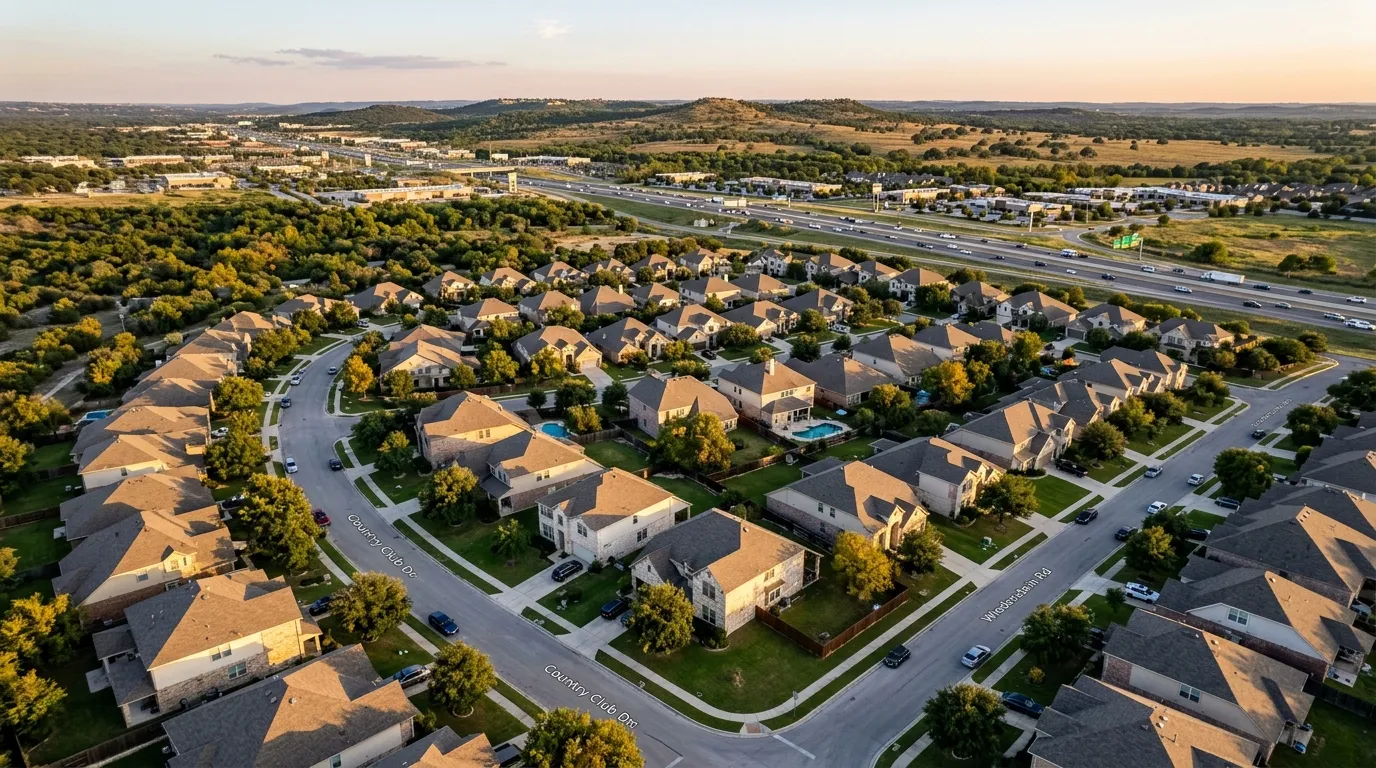
Cibolo and Schertz sit side by side on the I-35 corridor in Guadalupe County, filling the space between northeast San Antonio and New Braunfels. On a map they look like one community — and for a lot of buyers, they function like one. But they carry different price points, different neighborhood mixes, and slightly different market dynamics in 2026, so picking the right side of the line matters when you're shopping.
The thing that ties both cities together is three big draws: SCUCISD schools, short commutes to JBSA-Randolph and downtown San Antonio, and mid-market pricing that lets families get real square footage without stretching into Boerne or Bulverde territory. The thing that makes 2026 specifically interesting is that, after years of frenzy pricing and thin inventory, both markets have softened in the buyer's favor — and that's where negotiation leverage comes back into play. For a broader introduction to these communities, the Cibolo & Schertz area guide lays out the shape of each city and the sub-pages worth exploring.
Price Ranges You'll Actually See in 2026
If you're browsing listings on Zillow, Redfin, or Realtor.com and you notice the numbers disagree with each other, that's normal — each platform measures something slightly different. Zillow publishes a "typical home value" across all homes. Redfin reports the median sale price. Realtor.com reports median list prices. You need to read all three to get a feel for the market.
Here's what the data shows for early 2026:
- Cibolo: Zillow puts the typical home value near $333K (Feb 2026). Redfin's median sale price lands around $350K. Movoto shows median list closer to $421K — list prices tend to sit above sale prices in a softer market because sellers price for yesterday and negotiate for today.
- Schertz: Zillow's typical value is around $315K. Redfin reports a median sale price of about $358K, down roughly 6.7% year-over-year. Realtor.com shows active listings up more than 20% year-over-year, which is the inventory growth that's tilting the market toward buyers.
For a practical shopping range, most 2026 buyers in the 4-bedroom, 1,800–2,600 sq ft tier will be looking at roughly $325K–$425K. Entry-level resale on older 3/2s starts in the high-$200Ks. Larger new-construction product with upgraded finishes commonly runs $425K–$500K+. If you're already owning and curious where your existing Cibolo or Schertz home sits today, the home value tool is a fast way to get a starting number.
SCUCISD Schools: What to Look For
Schertz-Cibolo-Universal City ISD is the school district that shapes a huge share of the buyer decision here, especially for families. In 2025, SCUCISD posted a TEA overall rating of B (score 81) — an accountability snapshot that factors student achievement, school progress, and closing gaps across subgroups.
A few specifics worth knowing when you're comparing neighborhoods:
- Byron P. Steele II High School pulls much of the Cibolo side. Public report cards show a graduation rate near 97% and math/reading proficiency above the state baseline. Steele is often the anchor reason families migrate to Cibolo rather than the city's westward neighbors.
- Samuel Clemens High School serves much of Schertz, also reports a graduation rate in the mid-90s, and carries AP, IB, and GT program offerings on third-party profile sites. For families prioritizing college-prep pathways, Clemens is the usual draw.
- The district as a whole has been actively building and expanding elementary and middle school campuses to keep pace with growth — which means your address today may feed into a campus that's different from what a ten-year-old Google search will tell you.
The honest move, every time, is to confirm the feeder pattern for the specific address you're considering. TXSchools.gov is the authoritative source. A neighborhood's reputation and its actual 2026 feeder campus don't always match — especially in growth-phase parts of Cibolo.
Market Conditions: Where Buyer Leverage Shows Up
Both cities read as buyers-leaning in early 2026. Here's what that means on the ground rather than in a headline:
- Days on market are long. Redfin's Schertz profile shows an average DOM around 134 days in March 2026, up from roughly 120 the prior year. In Cibolo, Redfin notes segments of the market running well over 150 days, and Rocket Homes characterizes the city as a buyers' market with longer-than-peak market times.
- Inventory is up. Realtor.com's Schertz data shows active listings more than 20% higher year-over-year. That's not a crash — it's a rebalancing after years of extremely thin supply.
- Prices are flat to modestly down. Most sources show single-digit year-over-year declines rather than any kind of collapse. Sellers who price for today's comps move; sellers who price for 2022 sit.
Translation for a buyer: you usually have time, options, and room to negotiate. That might mean a price reduction, but just as often the real win is in seller concessions — closing cost credits, a rate buydown, a repair credit on inspection items. If you're financing, a concession toward a 2-1 rate buydown can save more on your monthly payment than a same-sized price cut. The mortgage pre-approval checklist is a good starting point for structuring your offer numbers correctly.
JBSA-Randolph, Commutes, and Daily Life
The defining feature of both cities is Joint Base San Antonio–Randolph. Schertz borders the base directly — many homes in eastern Schertz are a 5–10 minute drive to base gates. Cibolo sits a bit further out, with typical commute times of 10–20 minutes depending on which subdivision you're in. JBSA's own housing materials list Schertz, Cibolo, and Universal City as the primary off-base areas for Randolph personnel, which is reflected in how many residents are active-duty service members, veterans, or DoD civilians.
Beyond the base, the commute picture looks like this in 2026:
- Downtown San Antonio: typically 20–30 minutes via I-35 / Loop 1604 outside of rush hour. In heavy traffic, add another 10–15 minutes.
- New Braunfels: 15–20 minutes north up I-35 for most Cibolo and Schertz neighborhoods. If you work in San Antonio but want to spend weekends on the Guadalupe or at Gruene Hall, this corridor is built for it.
- San Antonio International Airport: roughly 20 minutes, which matters more than most people think — especially for active-duty families with frequent travel.
Day-to-day living has filled in significantly over the past decade. The Schertz Parkway and FM 3009 corridors carry most of the retail — H-E-B, Target, Home Depot, plus a deep bench of local restaurants. The Forum shopping center in Selma is next door. Schertz Civic Center runs a steady calendar of concerts, festivals, and farmers markets, while Cibolo has been building out a connected network of parks and trails. For families coming from bigger metros, the surprise is usually how much is within a 10-minute radius — not how little.
How Cibolo/Schertz Stacks Up Against Boerne and Bulverde
If you've been shopping the Texas Hill Country, you've probably looked at Boerne and Bulverde too. They're all part of the same general decision set, but they serve different buyer profiles:
- Boerne (Kendall County): Zillow's typical value in 2026 is around $545K, with homes going pending near 77 days on average. Boerne leans toward move-up buyers and luxury product, with a historic downtown and a strong "destination lifestyle" identity.
- Bulverde (Comal County and the north SA fringe): Prices commonly run $450K–$800K+, driven by large-lot acreage and custom homes. Bulverde appeals to privacy-seekers and custom-home buyers who want Hill Country terrain under their porch.
- Cibolo and Schertz: Median pricing lands in the $300K–$400K band. The product is predominantly master-planned and HOA subdivisions in the 1,800–2,800 sq ft range — built for families, commuters, and military households.
The honest positioning: if you want Hill Country aesthetics, acreage, and you're comfortable at $500K–$800K+, look at Boerne and Bulverde. If you want strong schools, short commutes to JBSA-Randolph and I-35 access to New Braunfels, and mid-market pricing, Cibolo and Schertz are hard to beat. For veterans and active-duty buyers using a VA loan, the base-proximity and military-family community weight the math further toward Cibolo/Schertz. If you haven't yet narrowed down a lender, the recommended lenders page lists the local teams experienced with VA, FHA, and first-time buyer programs.
Where to Start Your Search
If Cibolo/Schertz makes your short list, the smart first move isn't browsing more Zillow — it's getting honest about three things: your monthly payment comfort, your realistic hold period, and which school feeder pattern matters to you. Those three inputs collapse a big decision into a small one. From there, the question of "which neighborhood" becomes easier, because you can screen listings against the feeder map instead of the photos.
When you're ready to go deeper on a specific address, neighborhood, or timing question, reach out directly. I work this corridor every week, and the numbers — not the hype — drive what I'll tell you.
Sources: Zillow — Cibolo Home Values; Zillow — Schertz Home Values; Redfin — Schertz Housing Market; Realtor.com — Schertz Market; Texas Education Agency — A–F Accountability; TXSchools.gov — Campus Ratings; JBSA-Randolph.