
New Braunfels or Schertz: which is the better move for relocation buyers in 2026?
Quick Answer
It depends on your commute and what your budget buys in each city. Schertz delivers a 10-to-15-minute drive to Randolph AFB and the most house for your money — typical 2026 home values sit near $315,000, roughly $35,000 below New Braunfels. New Braunfels costs more — median listing prices near $379,000 — but buys the Hill Country lifestyle: two rivers, a real historic downtown, and one of the fastest-growing-city resale tailwinds in the country. If your orders point at Randolph, Schertz is the practical pick. If lifestyle and long-term appreciation matter more and you can handle the commute, New Braunfels wins.
How do home prices actually compare in 2026?
This is where the two cities separate cleanly, so let's put real numbers on the table.
New Braunfels is the pricier market. As of September 2026, Realtor.com reports a median listing price of $379,000 — down about 4.5% year-over-year — with a median sold price of $334,408 and $194 per square foot. Active inventory sits above 2,300 listings, and homes spend a median of 74 days on market. That inventory figure matters: there are more homes for sale than at any point in the last decade, which means buyers have real negotiating room for the first time in years. Sellers are competing for you, not the other way around.
On the monthly-cost side, Census data puts the median owner-occupied home value in New Braunfels near $339,400, with a median all-in owner cost of about $1,633 per month — mortgage, property taxes, insurance, and utilities combined. Property taxes alone average roughly $410 per month ($4,920 per year). If you want the full cost-of-living breakdown, the pros and cons of living in New Braunfels walk through every line item, from the $1,790 median rent to the $71,000 median household income.
Schertz runs noticeably lower. Zillow's typical home value for Schertz sat near $315,000 in early 2026, and most 4-bedroom resale homes in the 1,800–2,600 square foot tier trade between $325,000 and $425,000. Entry-level resale on older 3-bed, 2-bath homes starts in the high $200s. ESRI data from August 2026 pegs the Schertz median home value at $345,629 against a median household income of $103,808 — a price-to-income ratio that keeps monthly payments well within reach for dual-income relocation households.
The honest read: on a $350,000 budget, Schertz buys you a newer 4-bedroom in an established neighborhood. In New Braunfels, that same budget gets you in the door but forces tradeoffs — older resale, smaller lot, or a longer negotiation in a market where sellers are still adjusting from peak pricing. The Cibolo-Schertz corridor is simply where relocation buyers get the most house for the money, and that has been true for years.
One caveat that applies in both cities: never budget on principal and interest alone. Texas property taxes, homeowner insurance, and HOA dues can swing the monthly payment by hundreds of dollars between two houses at the same price. In Schertz specifically, remember that the city spans three counties — Guadalupe, Bexar, and Comal — which means the total tax rate can differ significantly from one parcel to the next. I pull the actual total tax rate for the specific property from the appraisal district before any buyer goes under contract. That's the number that drives your payment.
Which commute is easier from each city?
For relocation buyers with a job tied to a physical location — especially military families — commute is often the decision-maker, and here the geography is unambiguous.
Schertz was built for the JBSA commuter. The city sits immediately adjacent to Universal City, where Randolph AFB is located. A typical Schertz-to-Randolph drive runs 10 to 15 minutes in normal traffic. Schertz to Fort Sam Houston is about 15 to 22 minutes via I-35. Downtown San Antonio is roughly a 20-minute run down I-35 South. For a dual-military couple where one partner works at Randolph and the other at Fort Sam or BAMC, Schertz splits the difference better than almost any city in the metro.
New Braunfels asks more of your windshield time. Randolph AFB is roughly 20-plus miles south — figure 25 to 35 minutes in normal traffic, longer when I-35 bottlenecks through Schertz and Selma. Fort Sam Houston runs closer to 30–40 minutes. Downtown San Antonio is about 32 miles, typically a 35-to-45-minute drive. The tradeoff New Braunfels offers is different: you're splitting the Austin–San Antonio corridor, so if one partner works in Austin and the other in San Antonio, New Braunfels is one of the few cities that makes both commutes survivable.
Here is the practical test I give buyers: map your actual workplace, add 15 minutes to the off-peak estimate for 7:30 a.m. traffic, and ask whether you'd make that drive twice a day, five days a week, for three years. If your orders are to Randolph AFB, Schertz wins this category by a full hour a day. If you're a remote worker or your job is in Austin, New Braunfels' position between the two metros is the stronger play.
How do the schools stack up?
Both cities sit in districts that relocation families research carefully, and the details matter more than the reputations.
New Braunfels is primarily served by Comal ISD on the north side and west side — the district with a $567 million bond election on the November 2026 ballot signaling continued enrollment growth — plus New Braunfels ISD closer to the city core. Comal ISD's growth is the double-edged sword: new campuses keep opening to absorb thousands of new students a year, which supports resale demand in feeder neighborhoods but also means attendance boundaries can shift. A house zoned to one elementary this year may feed a new campus next year. Always verify the zoned schools for the specific address, not the general district reputation.
Schertz is largely served by Schertz-Cibolo-Universal City ISD (SCUC ISD), with established, proven high schools like Samuel Clemens and Byron P. Steele. The district is more built-out than Comal, which means fewer boundary surprises but also less of the new-campus premium that can lift nearby home values. Some Schertz addresses — remember those three counties — fall into neighboring districts, so the SCUC numbers mean nothing if your specific address zones elsewhere.
For the full district-by-district breakdown, the Comal ISD vs SCUC ISD comparison covers accountability ratings, growth patterns, and how each district's trajectory affects the real estate around it. If you're comparing against San Antonio-proper options too, the 2026 relocation buyer guide maps where each corridor fits for families with school-age kids.
My candid take: both districts get the job done for military families. Comal ISD has the momentum story; SCUC ISD has the stability story. Neither should be the sole reason you pick one city over the other — but if schools are your top priority, tour the specific zoned campuses, not just the district.
What does daily life actually feel like in each city?
Numbers tell you what a city costs. This section tells you what it feels like on a Tuesday.
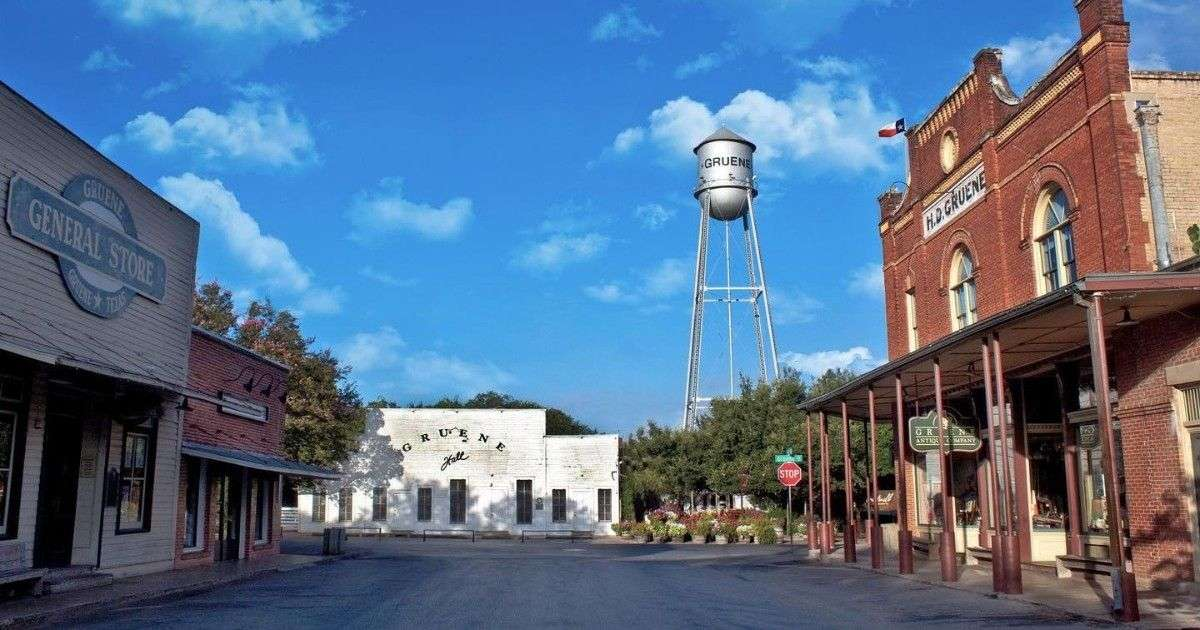
New Braunfels is the lifestyle city. Two spring-fed rivers — the Comal and the Guadalupe — run through town. The historic downtown has real German roots, Gruene Hall hosts live music, Schlitterbahn draws summer crowds, and the restaurant and retail scene has grown dramatically with the population. New Braunfels passed roughly 128,700 residents in 2026, more than double its 2010 population of about 58,000, and it regularly appears among the fastest-growing cities in the country per U.S. Census data. That growth brings amenities: better grocery options, more medical providers, new master-planned communities like Veramendi with walkability and green space built in from day one.
The cost of that growth is traffic on I-35, school boundary complexity, and a summer tourist season that makes the river corridors and downtown feel like a different city from June through August. If you buy near the rivers or the historic district, visit on a Saturday in July before you decide that scene is your everyday reality. There is no meaningful public transit — daily life requires a vehicle, and most households should budget for two cars.
Schertz is the practical city. It feels like a well-run suburb: parks, community pools, established neighborhoods with mature trees, grocery and retail along I-35, and a lower-key civic pace. It does not have rivers running through downtown or a tourist economy. What it has is convenience — everything a normal week requires is close, the city services are solid, and crime statistics are genuinely strong. In a 2025 SmartAsset national ranking of the safest suburbs in America, Schertz came in at No. 87 nationally and ranked as the San Antonio area's safest suburb; New Braunfels landed at No. 240. That's a meaningful gap for families weighing safety in the decision.
Schertz's population of about 44,300 (growing ~1.7% annually) means it is a fraction of New Braunfels' size. Some buyers hear that as "less to do," and they're not wrong — you will drive to San Antonio or New Braunfels for the bigger nights out. But for families whose week revolves around work, school, youth sports, and church, Schertz's compact convenience is a feature, not a bug.
Which city gives military families more value?
This is the heart of the question for PCS buyers, so let's be direct.
If you are heading to Randolph AFB, Schertz is the best value proposition in the corridor. The 10-to-15-minute commute is unmatched, SCUC ISD schools are solid, home prices start in the high $200s for entry-level resale, and the steady stream of military buyers and renters keeps resale demand reliable. When you PCS out, your buyer pool is the next wave of Randolph families — and they want exactly what you wanted. That is a durable resale floor.
If you are heading to Fort Sam Houston or BAMC, Schertz still works — 15 to 22 minutes — and New Braunfels becomes defensible only if the lifestyle premium matters enough to justify 30-plus minutes each way. Be honest with yourself about that trade before you commit.
On the financing side, both cities are well within VA loan territory — no down payment required, and the 2026 conforming loan limit of $832,750 covers virtually everything either market offers. Run your actual BAH numbers for your rank and dependency status against real listings before you fall in love with a price tag; the BAH rates page has the current figures, and the military relocation hub covers the broader PCS buying process. A single BAH frequently covers a mortgage in the Schertz price bands; in New Braunfels, the math gets tighter and depends on your rank and how much house you're buying.
The appreciation argument favors New Braunfels. Sustained 5%+ annual population growth, a buyer base fed by both Austin and San Antonio, and a decade of rising demand create a long-term tailwind that Schertz's steadier market doesn't match. But appreciation only helps if you hold long enough to capture it — and if you're a military family on a three-year tour, the Schertz combination of lower entry price, shorter commute, and a built-in military resale market is the safer three-year bet.
In Closing
There is no wrong answer between these two cities — there is only the right answer for your situation. PCSing to Randolph with school-age kids? Schertz gives you the shortest commute, solid schools, and the most house per dollar. Working remotely or splitting time between Austin and San Antonio, and willing to pay for the Hill Country lifestyle? New Braunfels rewards that choice with rivers, a real downtown, and one of the strongest growth stories in Texas. The next step is simple: line up three real listings in each city at your actual budget, run the full monthly payment — taxes, insurance, HOA included — and drive both commutes on a weekday morning. The numbers and the steering wheel will tell you the rest. If you want a second set of eyes on the comparison before you commit, that's exactly the kind of decision I help relocation buyers work through every week.
Sources: Realtor.com — New Braunfels, TX housing market (September 2026); World Population Review — New Braunfels, Texas population 2026; CultureMap San Antonio — SmartAsset safest suburbs in America 2025; Guadalupe Valley Economic Development — Schertz, Texas community profile (ESRI, Aug 2026).