
What should buyers check before buying Hill Country acreage in Texas in 2026?
Quick Answer
Hill Country acreage buyers should verify water source, septic feasibility, legal access, deed restrictions, floodplain exposure, utility costs, and property tax status before treating a tract as a good fit. The Texas Real Estate Research Center reported the Austin-Waco-Hill Country rural land region near $7,700 per acre in early 2026, but usable acreage near New Braunfels, Canyon Lake, Bulverde, and Boerne can price very differently based on views, improvements, water, and restrictions. The right question is not only what the land costs today. It is what it will cost to own, build on, insure, maintain, and resell. For expert updates, contact Cody Posey Real Estate.
Why is Hill Country acreage different from buying a subdivision home?
A typical subdivision purchase starts with the house: layout, condition, payment, HOA, commute, and resale. Hill Country acreage starts with the land itself. Before you fall in love with an oak-covered slope or a long view toward Canyon Lake, you need to know whether the property can support the life you want there. The prettiest tract can become the wrong tract if the water source is weak, the septic area is limited, the access is private and poorly maintained, or the deed restrictions block your plans.
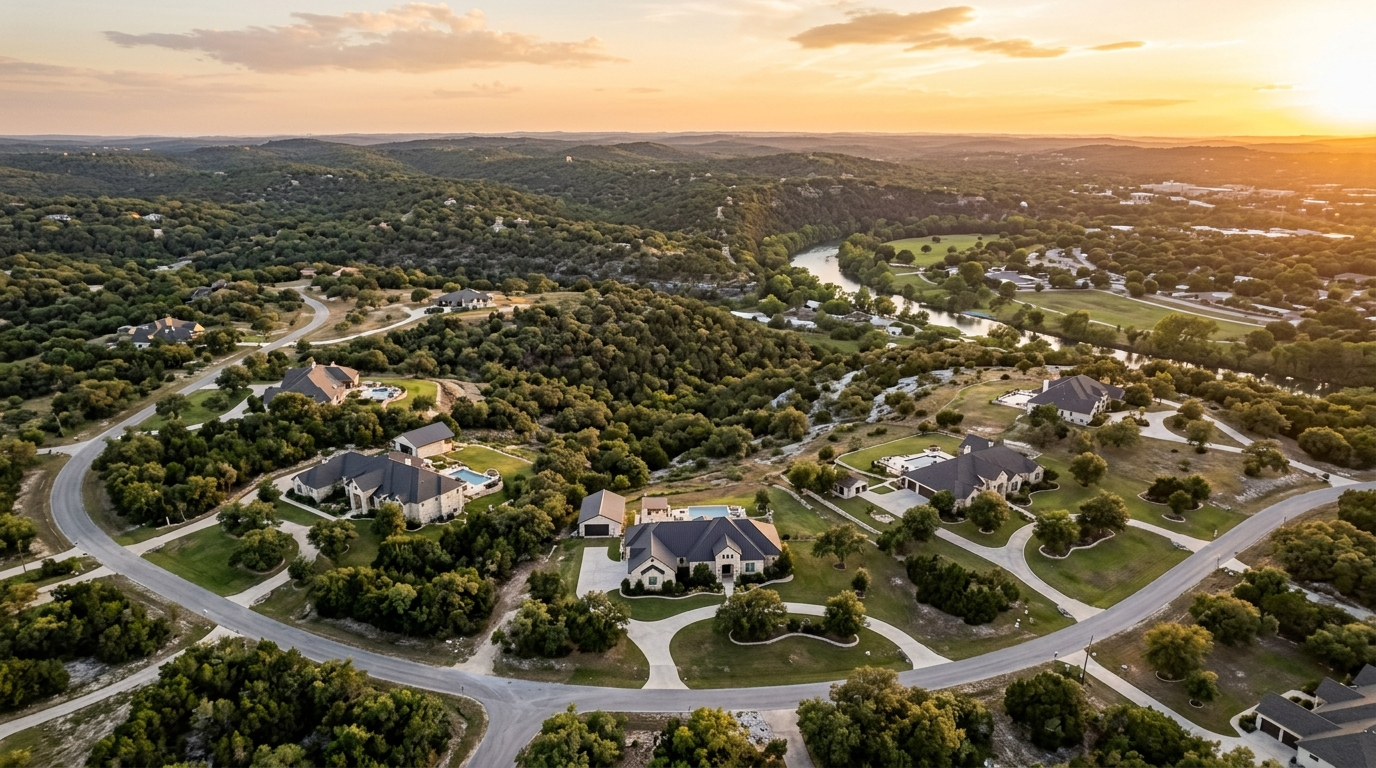
That is why I treat acreage buyers differently than buyers looking at a home in Veramendi, Gruene, or a typical New Braunfels neighborhood. With acreage, the driveway, build site, utility route, drainage pattern, fencing, wildlife or ag valuation, and surrounding land uses all matter before you talk about granite counters or porch views. If you are moving from Austin, San Antonio, Houston, or out of state, this is where the Hill Country can surprise you. Five acres on paper can feel like one usable acre if the slope, floodplain, setbacks, and rock limit where a home can actually sit.
The market also rewards the right land more aggressively than buyers expect. The Texas Real Estate Research Center's Winter 2026 rural land reporting showed the Austin-Waco-Hill Country region around $7,700 per acre, with activity up from the prior year. That regional number is a starting point, not a pricing rule. Near New Braunfels, Bulverde, Spring Branch, Canyon Lake, and the I-35 corridor, buyers often pay premiums for usable topography, paved access, community amenities, views, live water, or proximity to town. If you want a broader feel for area tradeoffs before narrowing the search, start with Cody's Texas Hill Country area guide and then compare the land details property by property.
What water, septic, and utility questions should come first?
Water decides whether the dream is practical. A Hill Country acreage tract may have public water, a private well, a shared well agreement, a water tap available at the road, or no water solution in place yet. Those are not small differences. Public water can simplify ownership, but tap fees, meter availability, line extensions, and provider rules still matter. A private well requires different diligence: well depth, production history, water quality, nearby well data, equipment condition, and any groundwater district requirements.
This is exactly the kind of question I walk buyers through before we ever write the offer. People will say, "It has a well," like that ends the conversation. It does not. I want to know whether that well supports the intended use, whether there are records, whether the seller has recent water testing, and whether drought conditions could change the day-to-day experience. For a deeper look at this one issue, Cody's well water testing guide for Hill Country buyers is worth reading before you tour rural property.
Septic is the next major checkpoint. Outside city sewer service, you need to understand whether the land has an existing on-site sewage facility, whether it was permitted, where the drain field sits, and whether the soils and setbacks will support the home size you want. On some smaller acreage lots, the septic field, driveway, easements, trees, slope, and preferred home site compete for the same space. That can change the build plan fast. Cody's Texas Hill Country septic disclosure guide explains why septic due diligence should happen during the option period, not after closing.
Utilities deserve the same scrutiny. Ask how far power is from the build site, whether poles or trenching are needed, what internet options are realistic, and whether propane will be part of the setup. A lot that looks affordable can become expensive once you add road work, clearing, rock excavation, utility extensions, fencing, gates, water storage, septic design, and site prep. The land price is only one line in the real budget. If payment matters, compare the lot and improvement plan against your monthly range before you stretch for acreage that still needs major infrastructure.
Trying to decide which Hill Country acreage area actually fits your budget and lifestyle?
Cody will compare area tradeoffs, land-use questions, and likely due-diligence issues before you commit to a tract.
Call Cody Posey Real Estate at 830.360.5569 · Compare Hill Country areas that fit how you live
How do restrictions, access, and floodplain issues change the deal?
Restrictions tell you what the land will allow. Many Hill Country buyers say they want "unrestricted" land, but that word gets used loosely in marketing. Some properties have recorded deed restrictions. Some sit inside acreage communities with architectural guidelines, minimum square footage, animal limits, short-term rental rules, fencing standards, or builder requirements. Some rural tracts have older restrictions in the chain of title that are easy to miss if you only read the listing description.
Access is just as important. A property can front a public road, sit behind a private gate, depend on a shared easement, or require a road maintenance agreement. Lenders and insurers may care about that. Future buyers will too. A narrow shared easement, unclear maintenance responsibility, or driveway that washes out after heavy rain can affect daily life and resale. When I see buyers get too focused on the view, this is one of the first places I slow the conversation down. A beautiful hilltop does not help if getting there is a constant problem.
Floodplain review belongs near the top of the list, especially around the Guadalupe River, Comal River, Cibolo Creek, Canyon Lake tributaries, and low-water crossings. A property does not have to be waterfront to have drainage or flood exposure. You want to check FEMA flood maps, survey details, elevation certificates when available, and the way water moves across the tract. Cody's Hill Country flood zone questions guide covers the buyer questions that can protect your option period.
The local-only part Cody sees often is this: relocating buyers sometimes think Hill Country acreage is either a lifestyle upgrade or a privacy play, but the real split is usable land versus scenic land. A steep tract with a dramatic view may be perfect for one custom build and terrible for animals, a shop, an RV pad, or aging-in-place plans. A flatter tract without the postcard view may live better every single day. The right acreage is the one that fits your actual use, not just the one that photographs well.
What carrying costs should acreage buyers underwrite before closing?
Acreage ownership has a different cost profile than buying a finished home on a city lot. Property taxes, HOA dues, road maintenance, fencing, brush management, well equipment, septic maintenance, insurance, gates, culverts, and utility infrastructure can all show up after the excitement of the purchase. If the property has an agricultural or wildlife valuation, you also need to understand what that valuation does, what the current owner has done to maintain it, and what could trigger rollback taxes if the use changes.
Texas property taxes can make or break the payment conversation because there is no state income tax and local property taxes carry more weight. County appraisal districts set values, while tax rates come from overlapping jurisdictions. That matters on acreage because land value, improvements, exemptions, and special valuations can change the annual cost materially. If you are moving from another state or from a city lot, do not assume the seller's current tax bill is your future tax bill.
Insurance also deserves early attention. River-adjacent, canyon-adjacent, remote, heavily wooded, or improved rural properties may quote differently than a standard suburban home. Older outbuildings, limited fire access, flood exposure, or multiple structures can affect underwriting. Ask for insurance input during the option period, not the week before closing. You do not want to discover late that the policy cost changes the payment or that the lender needs something corrected.
This is why the best acreage plan is not just "find land." It is compare areas, build a realistic ownership budget, and confirm the deal works before you fall in love with it. For a buyer considering New Braunfels, Canyon Lake, Bulverde, Spring Branch, Garden Ridge, or the broader Hill Country, I would rather narrow the search around the right use case first: privacy, views, animals, custom build, lake access, workshop space, or long-term hold. Then we can match the property search to the life you are actually trying to build.
Acreage Buyer Checklist
- Define the use case first: custom home, animals, workshop, privacy, lake access, short-term rental, or long-term land hold.
- Verify water, septic, access, floodplain, restrictions, utilities, tax status, and insurance during the option period.
- Price the whole plan, not just the land: lot cost, site prep, infrastructure, loan structure, taxes, HOA dues, and maintenance.
- Compare New Braunfels, Canyon Lake, Bulverde, Spring Branch, and nearby Hill Country pockets before choosing one tract.
- Call Cody Posey Real Estate at 830.360.5569, then use the Hill Country area comparison to decide where acreage makes sense.
In Closing
If you are planning to buy Hill Country acreage in the next 3 to 6 months, the next step is not chasing the prettiest listing. It is building a property-specific checklist for water, septic, access, restrictions, taxes, insurance, and resale before you write the offer.
Call Cody Posey Real Estate at 830.360.5569 and I will help you compare the right Hill Country areas, pressure-test the land details, and build a practical acreage game plan before you spend option-period money.
Ready to talk strategy? Cody Posey Real Estate at 830.360.5569.
Sources: Texas Real Estate Research Center - Rural Land Winter 2026 · Texas Commission on Environmental Quality - On-Site Sewage Facilities · Texas Comptroller - Manual for the Appraisal of Agricultural Land · FEMA Flood Map Service Center